




All News
Publications
”More>>”
Videos
”More>>”
Events
”More>>”
Journalists on the podium
”More>>”
Advertisement
Young Reporter’s corner
”More>>”
Jeonbuk Aims to Become a Global Sports Hub Through Strategic Focus
Jeonbuk, Republic of Korea, April 29, 2026: Jeonbuk State is vigorously spreading its wings to emerge as a central hub of sports in the Republic of Korea through a “major transformation of sports infrastructure” encompassing everything from nurturing youth talent to expanding sport-specific specialized training facilities. On the 28th, Jeonbuk announced that it will launch a mid- to long-term roadmap with a total project cost of approximately KRW 500 billion to realize a differentiated sports industry city based on “selection andconcentration,” and to build an innovative ecosystem where elite sports and recreational sports coexist.
◆ Establishing a Global Sports Hub through Future-Oriented Talent Development and Specialized Facilities
○ The most core project is the construction of a “Youth Sports Complex,” into which KRW 49 billion of full national funding will be invested. Scheduled for completion in 2028, this facility will have a total floor area of 11,000㎡ and will be equipped with training venues for major sports such as gymnastics, handball, and volleyball, as well as a state-of-the-art dormitory capable of accommodating 200 people. It is expected to become a national training base supporting the systematic development of youth athletes across the country.
In addition, from 2029, based on demand analysis reflecting voices from the field, the plan is to significantly strengthen infrastructure for strategic sports. Specialized training facilities will be gradually expanded for combat sports such as judo, wrestling, and boxing, as well as Jeonbuk’s strong disciplines such as fencing and shooting, providing optimal training environments for elite athletes and promoting regional economic revitalization by attracting domestic and international training camps.
○ The state also plans to make bold investments in building hardware that will serve as the foundation for sports activities. Approximately KRW 87.5 billion will be invested to construct 13 “National Sports Centers” tailored
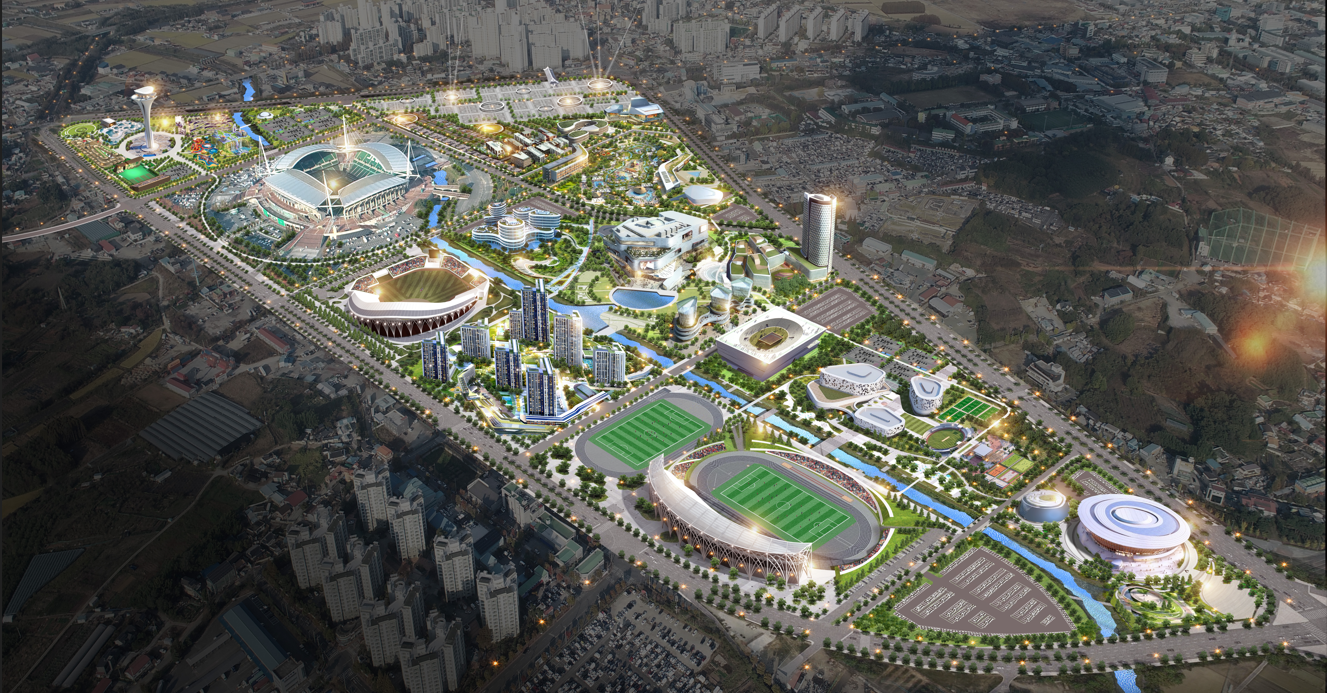
for seniors, children, and persons with disabilities across the state. In addition, representative sports landmarks such as the Jeonju World Cup Sports Town (KRW 223 billion) and the Wanju Comprehensive Sports Town (KRW 99 billion) will be developed to provide high-quality sports spaces for residents. Plans are also underway to accelerate the expansion of specialized facilities reflecting Jeonbuk’s unique regional characteristics. Through projects such as the Gochang canoe slalom stadium, specialized training facilities (air dome), reinforcement of the Gunsan artificial climbing wall, and expansion of the Iksan public equestrian center, the state aims to improve training conditions for professional athletes and actively attract nationwide training teams to enhance regional economic vitality.
○ Lastly, by utilizing the established infrastructure, Jeonbuk plans to consecutively host large-scale international competitions such as the “IFSC Sport Climbing Competition (Nov. 2026 / Gunsan Climbing Wall),” the “Ice Hockey Asian Championship (Nov. 2026 / Jeonju Ice Rink),” and the “Asian Weightlifting Championships (May 2027 / Jeonju Hwasan Gymnasium).” Through this, it aims to imprint Jeonbuk as a global sports hub and maximize the inflow of sports tourists, thereby completing a virtuous cycle in which sports become a key axis of regional economic growth.
◆ Establishment of a Global Taekwondo Sports Hub
○ In order to solidify its symbolism as the birthplace of Taekwondo and connect it to industry and tourism, Jeonbuk is accelerating the establishment of a “Global Taekwondo Sports Hub” encompassing talent development, infrastructure, and international competitions, centered on Muju Taekwondowon.
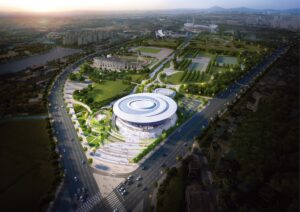
As a key driving force, the “Global Taekwondo Talent Development Center,” which will be responsible for the education and training of Taekwondo practitioners worldwide, will be built in Muju. With a total investment of KRW 45 billion (fully funded by the national government) and scheduled for completion in 2029, this center will be developed as a world-class educational institution equipped with professional training facilities and auxiliary facilities, and will serve as a central hub of a global human network where promising Taekwondo athletes and leaders from around the world gather.
○ In addition to expanding physical infrastructure, administrative capabilities will be concentrated on establishing the “Second Kukkiwon,” which is the core of software. Following the relocation of the Asian Taekwondo Union in January, the state plans to complete the final piece of the Taekwondowon’s sanctification by building the Second Kukkiwon in Muju, which will handle key functions such as dan promotion tests, training programs, and demonstration team operations, thereby establishing itself as the undisputed global center of Taekwondo.
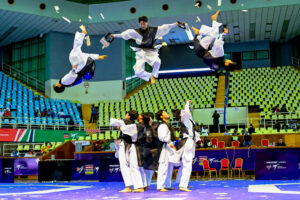
○ Based on this infrastructure and symbolism, Jeonbuk plans to draw global attention by consecutively hosting world-class competitions in Muju throughout 2026. Starting with the “World Taekwondo Grand Prix (Sept. 5–7)” and the “World Para Taekwondo Grand Prix (Sept. 4)” in September, followed by the “World Para Taekwondo Championships (Nov. 20–22),” approximately 3,000 athletes from around 40 countries are expected to visit, demonstrating Jeonbuk’s global sports marketing capabilities.
○ Through a virtuous cycle of talent development (infrastructure), institutional attraction (sanctification), and international competitions (marketing), Jeonbuk aims to invigorate the regional economy. In particular, by completing the cultural authenticity of Taekwondo—the national sport of the Republic of Korea—in Jeonbuk through its inscription as a UNESCO Intangible Cultural Heritage, the state seeks to leap forward as a “sports tourism platform” that Taekwondo practitioners worldwide must visit at least once in their lifetime and as a “global Taekwondo hub” standing prominently on the world sports map.
◆ Promoting Citizens’ Health through Activation of Recreational Sports and Smart Sports Infrastructure
○ Jeonbuk plans to establish a virtuous cycle that enhances residents’ health while revitalizing the regional economy through the inflow of active populations by creating an environment where “anyone can enjoy sports anytime, anywhere.” To this end, lifecycle-based customized support and smart sports facilities will be established.
First, the state will strengthen sports services that reach into the daily lives of residents. Approximately KRW 9.1 billion will be invested to expand the deployment of 237 sports instructors, and support will be provided for sports activities accessible to all generations and groups, ranging from early childhood sports programs to adult amateur leagues, as well as sports voucher programs for underprivileged groups. In particular, inclusive sports environments without blind spots will be created by actively supporting participation in nationwide competitions and hosting local competitions for persons with disabilities.
○ In addition, along with the distribution of “Virtual Reality (VR) Sports Rooms” incorporating advanced ICT technology, Jeonbuk will focus on the construction of “Smart National Sports Centers” through public contests, thereby expanding smart sports infrastructure based on cutting-edge technology. Smart National Sports Centers refer to advanced facilities equipped with smart courts, high-tech training equipment, VR/AR-based virtual experience spaces, physical fitness measurement and analysis systems, and healthcare devices. This year, VR sports rooms will be installed in nine locations across four cities and counties—Namwon, Gimje, Wanju, and Buan—with a total investment of KRW 450 million. This project supports safe indoor sports activities regardless of external conditions such as fine dust or heatwaves, and particularly prioritizes national and public facilities for the elderly, children, and persons with disabilities to ensure sports rights for vulnerable groups.
Furthermore, beyond simple facility provision, Jeonbuk plans to strategically respond to public contests for the construction of smart National Sports Centers to build smart infrastructure. Through the expansion of such infrastructure, the state aims to eliminate blind spots in sports participation and realize “inclusive sports welfare” that extends healthy lifespans. Moreover, by linking accumulated sports data with related industries, Jeonbuk plans to establish itself as a global hub of the sports industry where advanced technology and sports converge. Shin Won-sik, Director General of the Culture, Sports and Tourism Bureau of Jeonbuk, stated, “Now is the time for sports to undergo a major transformation from simple welfare to a high value-added industry that drives the regional economy,” adding,“We will create a smart sports environment that can be enjoyed by everyone, from youth to elite athletes and ordinary citizens.”He further emphasized, “By organically combining the sanctification of global Taekwondo, large-scale infrastructure expansion, and data-driven sports science, we will elevate Jeonbuk State into a ‘global sports-specialized city’ that attracts worldwide attention.”
Jeonbuk Aims to Become a Global Sports Hub Through Strategic Focus
Jeonbuk, Republic of Korea, April 29, 2026: Jeonbuk State is vigorously spreading its wings to emerge as a central hub of sports in the Republic of Korea through a “major transformation of sports infrastructure” encompassing everything from nurturing youth talent to expanding sport-specific specialized training facilities. On the 28th, Jeonbuk announced that it will launch a mid- to long-term roadmap with a total project cost of approximately KRW 500 billion to realize a differentiated sports industry city based on “selection andconcentration,” and to build an innovative ecosystem where elite sports and recreational sports coexist.
◆ Establishing a Global Sports Hub through Future-Oriented Talent Development and Specialized Facilities
○ The most core project is the construction of a “Youth Sports Complex,” into which KRW 49 billion of full national funding will be invested. Scheduled for completion in 2028, this facility will have a total floor area of 11,000㎡ and will be equipped with training venues for major sports such as gymnastics, handball, and volleyball, as well as a state-of-the-art dormitory capable of accommodating 200 people. It is expected to become a national training base supporting the systematic development of youth athletes across the country.
In addition, from 2029, based on demand analysis reflecting voices from the field, the plan is to significantly strengthen infrastructure for strategic sports. Specialized training facilities will be gradually expanded for combat sports such as judo, wrestling, and boxing, as well as Jeonbuk’s strong disciplines such as fencing and shooting, providing optimal training environments for elite athletes and promoting regional economic revitalization by attracting domestic and international training camps.
○ The state also plans to make bold investments in building hardware that will serve as the foundation for sports activities. Approximately KRW 87.5 billion will be invested to construct 13 “National Sports Centers” tailored
for seniors, children, and persons with disabilities across the state. In addition, representative sports landmarks such as the Jeonju World Cup Sports Town (KRW 223 billion) and the Wanju Comprehensive Sports Town (KRW 99 billion) will be developed to provide high-quality sports spaces for residents. Plans are also underway to accelerate the expansion of specialized facilities reflecting Jeonbuk’s unique regional characteristics. Through projects such as the Gochang canoe slalom stadium, specialized training facilities (air dome), reinforcement of the Gunsan artificial climbing wall, and expansion of the Iksan public equestrian center, the state aims to improve training conditions for professional athletes and actively attract nationwide training teams to enhance regional economic vitality.
○ Lastly, by utilizing the established infrastructure, Jeonbuk plans to consecutively host large-scale international competitions such as the “IFSC Sport Climbing Competition (Nov. 2026 / Gunsan Climbing Wall),” the “Ice Hockey Asian Championship (Nov. 2026 / Jeonju Ice Rink),” and the “Asian Weightlifting Championships (May 2027 / Jeonju Hwasan Gymnasium).” Through this, it aims to imprint Jeonbuk as a global sports hub and maximize the inflow of sports tourists, thereby completing a virtuous cycle in which sports become a key axis of regional economic growth.
◆ Establishment of a Global Taekwondo Sports Hub
○ In order to solidify its symbolism as the birthplace of Taekwondo and connect it to industry and tourism, Jeonbuk is accelerating the establishment of a “Global Taekwondo Sports Hub” encompassing talent development, infrastructure, and international competitions, centered on Muju Taekwondowon.
As a key driving force, the “Global Taekwondo Talent Development Center,” which will be responsible for the education and training of Taekwondo practitioners worldwide, will be built in Muju. With a total investment of KRW 45 billion (fully funded by the national government) and scheduled for completion in 2029, this center will be developed as a world-class educational institution equipped with professional training facilities and auxiliary facilities, and will serve as a central hub of a global human network where promising Taekwondo athletes and leaders from around the world gather.
○ In addition to expanding physical infrastructure, administrative capabilities will be concentrated on establishing the “Second Kukkiwon,” which is the core of software. Following the relocation of the Asian Taekwondo Union in January, the state plans to complete the final piece of the Taekwondowon’s sanctification by building the Second Kukkiwon in Muju, which will handle key functions such as dan promotion tests, training programs, and demonstration team operations, thereby establishing itself as the undisputed global center of Taekwondo.
○ Based on this infrastructure and symbolism, Jeonbuk plans to draw global attention by consecutively hosting world-class competitions in Muju throughout 2026. Starting with the “World Taekwondo Grand Prix (Sept. 5–7)” and the “World Para Taekwondo Grand Prix (Sept. 4)” in September, followed by the “World Para Taekwondo Championships (Nov. 20–22),” approximately 3,000 athletes from around 40 countries are expected to visit, demonstrating Jeonbuk’s global sports marketing capabilities.
○ Through a virtuous cycle of talent development (infrastructure), institutional attraction (sanctification), and international competitions (marketing), Jeonbuk aims to invigorate the regional economy. In particular, by completing the cultural authenticity of Taekwondo—the national sport of the Republic of Korea—in Jeonbuk through its inscription as a UNESCO Intangible Cultural Heritage, the state seeks to leap forward as a “sports tourism platform” that Taekwondo practitioners worldwide must visit at least once in their lifetime and as a “global Taekwondo hub” standing prominently on the world sports map.
◆ Promoting Citizens’ Health through Activation of Recreational Sports and Smart Sports Infrastructure
○ Jeonbuk plans to establish a virtuous cycle that enhances residents’ health while revitalizing the regional economy through the inflow of active populations by creating an environment where “anyone can enjoy sports anytime, anywhere.” To this end, lifecycle-based customized support and smart sports facilities will be established.
First, the state will strengthen sports services that reach into the daily lives of residents. Approximately KRW 9.1 billion will be invested to expand the deployment of 237 sports instructors, and support will be provided for sports activities accessible to all generations and groups, ranging from early childhood sports programs to adult amateur leagues, as well as sports voucher programs for underprivileged groups. In particular, inclusive sports environments without blind spots will be created by actively supporting participation in nationwide competitions and hosting local competitions for persons with disabilities.
○ In addition, along with the distribution of “Virtual Reality (VR) Sports Rooms” incorporating advanced ICT technology, Jeonbuk will focus on the construction of “Smart National Sports Centers” through public contests, thereby expanding smart sports infrastructure based on cutting-edge technology. Smart National Sports Centers refer to advanced facilities equipped with smart courts, high-tech training equipment, VR/AR-based virtual experience spaces, physical fitness measurement and analysis systems, and healthcare devices. This year, VR sports rooms will be installed in nine locations across four cities and counties—Namwon, Gimje, Wanju, and Buan—with a total investment of KRW 450 million. This project supports safe indoor sports activities regardless of external conditions such as fine dust or heatwaves, and particularly prioritizes national and public facilities for the elderly, children, and persons with disabilities to ensure sports rights for vulnerable groups.
Furthermore, beyond simple facility provision, Jeonbuk plans to strategically respond to public contests for the construction of smart National Sports Centers to build smart infrastructure. Through the expansion of such infrastructure, the state aims to eliminate blind spots in sports participation and realize “inclusive sports welfare” that extends healthy lifespans. Moreover, by linking accumulated sports data with related industries, Jeonbuk plans to establish itself as a global hub of the sports industry where advanced technology and sports converge. Shin Won-sik, Director General of the Culture, Sports and Tourism Bureau of Jeonbuk, stated, “Now is the time for sports to undergo a major transformation from simple welfare to a high value-added industry that drives the regional economy,” adding,“We will create a smart sports environment that can be enjoyed by everyone, from youth to elite athletes and ordinary citizens.”He further emphasized, “By organically combining the sanctification of global Taekwondo, large-scale infrastructure expansion, and data-driven sports science, we will elevate Jeonbuk State into a ‘global sports-specialized city’ that attracts worldwide attention.”
Publications
”More>>”
Videos
”More>>”
Events
”More>>”
Journalists on the podium
”More>>”
Advertisement
Young Reporter’s corner
”More>>”
Video Gallery