Videos
”More>>”

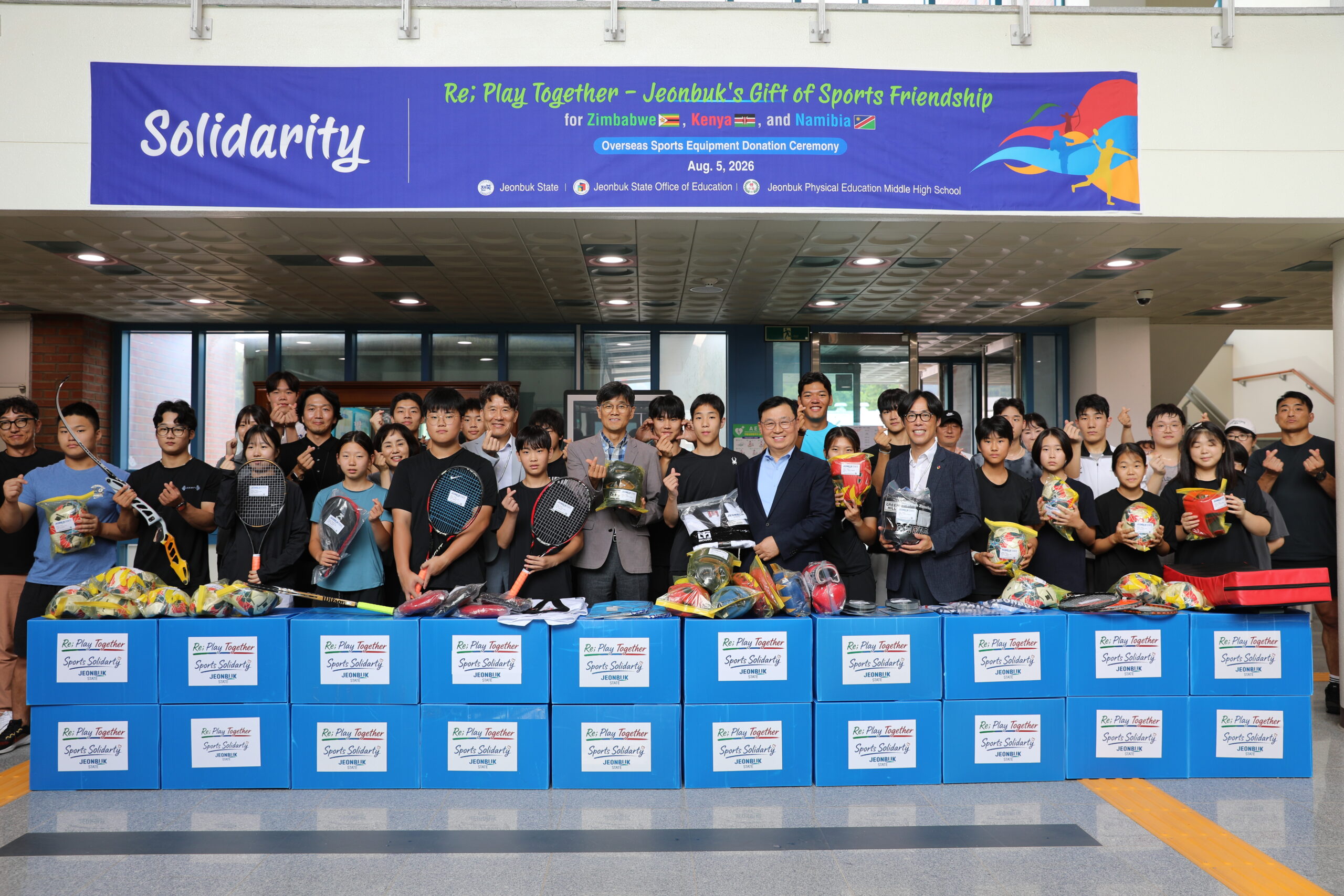
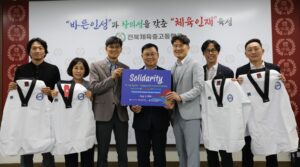
Jeonbuk State, in collaboration with the Jeonbuk State Office of Education and Jeonbuk Physicl Education Middle & High School, is continuing international exchange and friendship through sports by delivering sports equipment donated by students to youth in three African nations. On the 5th, the State and the Office of Education held a send-off ceremony at Jeonbuk Sports Middle & High School for the project titled “Re; Play Together, Jeonbuk Sports Friendship Gifts,” shipping the items to Zimbabwe, Kenya, and Namibia. The theme, ‘Re; Play Together,’ signifies resuming games (Re; Play) that had been halted due to a shortage of soccer balls and sports gear, this time together with Jeonbuk.

This initiative goes beyond mere material support; it aims to practice solidarity and friendship across borders through sports and to expand the foundation for exchange among future generations. In particular, sharing equipment that students actually used spreads the value of sharing while extending Jeonbuk’s international sports diplomacy into schools and the local community. The project originated from visits last year by officials from Zimbabwe and Namibia, with whom Jeonbuk has maintained international sports exchanges. During their visit to Jeonbuk Sports Middle & High School, they requested support for sports equipment. Students readily agreed to contribute, leading to a broader international exchange program supported by the State, the Office of Education, and the school. The donated items total 616 pieces across 12 sports, including soccer, taekwondo, shooting, archery, swimming, etc. —comprising both gear previously used by students and new items collected for this project. The equipment will be delivered to the Ministry of Sport, Recreation, Arts and Culture and National Olympic Committees of each country via Zimbabwean diplomatic missions and international shipping. It will then be distributed to young athletes and youth active in organizations such as the Kirsty Coventry Academy in Zimbabwe, the Waitaka Taekwondo Club in Kenya, and the MTC Hopsol Youth Soccer League in Namibia.
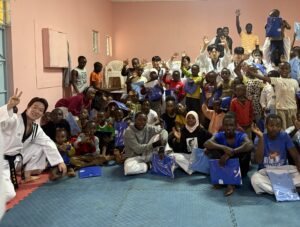
Kim Jong-phil, Director General of Jeonbuk State’s 2036 Summer Olympics Bid Department, stated: “I hope the precious sports items that nurtured the dreams of our Jeonbuk students will serve as a new source of hope for African youth. Moving forward, we will continue to promote international exchange through sports, guided by the International Olympic Committee’s (IOC) core values of inclusion and solidarity.” Im Young-gun, Director of Arts, Physical Ed & Health Division at the Jeonbuk State Office of Education, said, “It was a meaningful opportunity for our students to put into practice the spirit of sportsmanship through sharing and caring while developing a global perspective. We hope that the students’ small but heartfelt gesture will be warmly received by young people in Africa.”

Meanwhile, Jeonbuk State has been steadily expanding its international sports network by dispatching a Taekwondo demonstration team to the World Taekwondo U-21 Championship in Kenya, participating in the World Union of Olympic Cities General Assembly, and broadening sports exchanges with African nations. Starting with the “Sports Friendship Gift” pilot project, Jeonbuk State plans to consider expanding the countries and sports covered by the initiative, while also promoting the hosting of international sporting events and exchange programs inviting young athletes from overseas, with the goal of developing Jeonbuk into a specialized international sports city.
Events
”More>>”
Journalists on the podium
”More>>”
Advertisement
Young Reporter’s corner
”More>>”

Aichi-Nagoya 2026 bids farewell as Doha 2030 takes up the Asian Games mantle

By: Nadine Alsheikh Hassan AIPS MEDIA

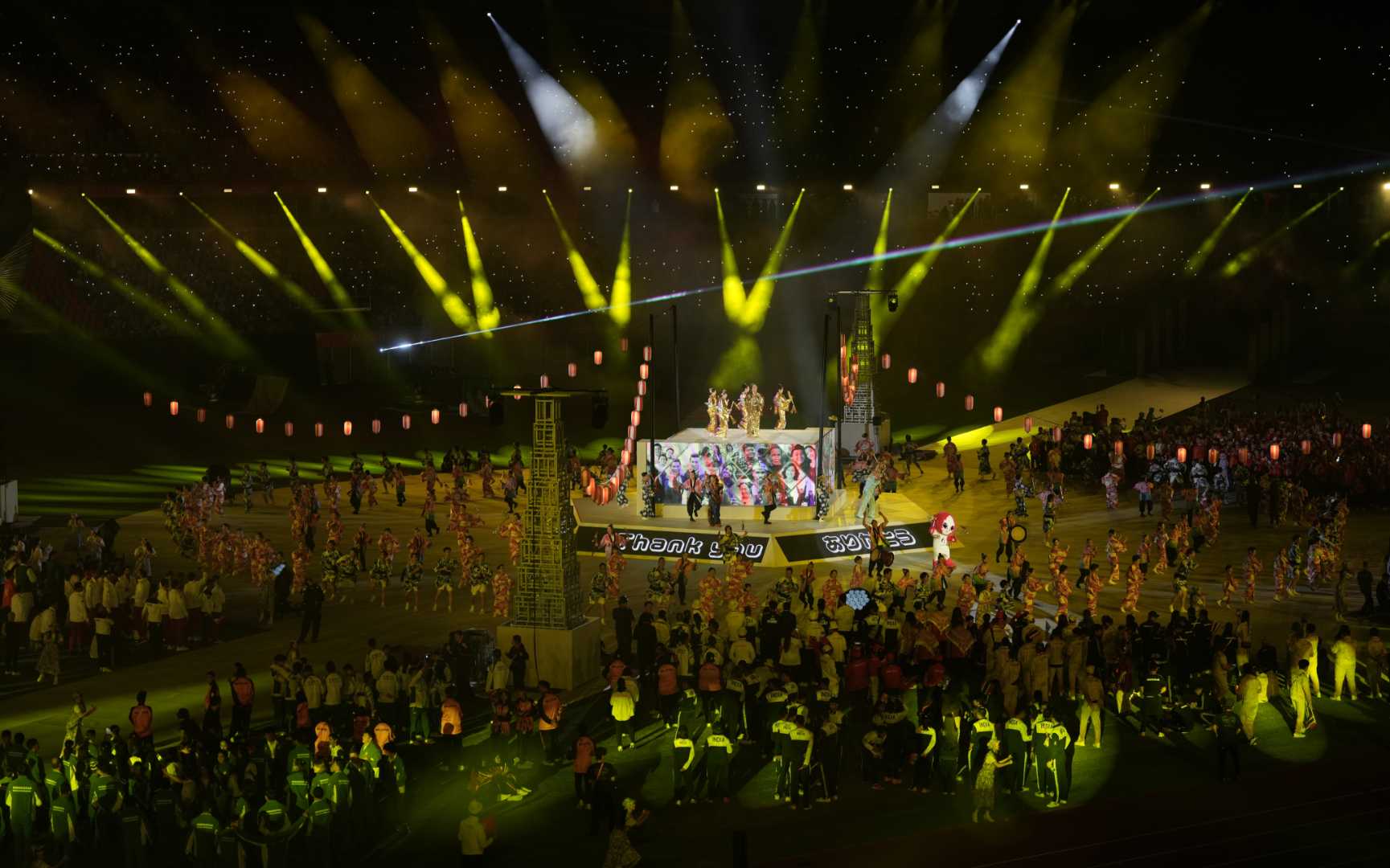
NAGOYA, October 4, 2026 – Aichi-Nagoya 2026 said farewell to the 20th Asian Games with an evening of colour, Japanese music and shared celebration in the Closing Ceremony at Paloma Mizuho Stadium in Nagoya, bringing 16 days of competition to a close and passing the hosting honour to Doha 2030. With the competitions settled, athletes returned to the stadium for a final gathering built around appreciation, friendship and the emotions accumulated throughout the Games. The 90-minute ceremony began at 18:00 in the presence of Crown Prince Akishino and Crown Princess Kiko, OCA President Sheikh Joaan bin Hamad Al Thani, and Qatar’s Prime Minister and Minister of Foreign Affairs Sheikh Mohammed bin Abdulrahman bin Jassim Al Thani, OCA Vice President for Doha 2030 and Secretary-General of the Qatar Olympic Committee, Jassim bin Rashid Al Buenain. Following the arrival of the dignitaries, the Japanese flag was raised before athletes flowed into the stadium for one final celebration.

ONE ASIA, ONE HEART Directed by Nagoya-born Yukihiko Tsutsumi, the closing ceremony celebrated the Games under the unifying concept “One Asia”. Japanese tradition met modern technology through music, kimono-clad dancers and futuristic elements, while performers in cherry blossom-inspired costumes added energy to the show. Athletes gathered for photographs as a video montage revisited some of the Games’ defining moments, including the achievements of China, which topped the medal table with 169 golds and 341 medals overall.

A FINAL MESSAGE Hideaki Ohmura, Governor of Aichi Prefecture and president of the organising committee, centred his closing address on the athletes’ determination and the friendships formed beyond competition. He recalled athletes giving their all until the end, congratulating one another afterwards and receiving support from spectators from Japan and across Asia. “Sports have the tremendous power to bring people together across languages, cultures, and national borders,” he said. Reflecting on the Games slogan, “Imagine One Asia”, Ohmura said the philosophy behind the event had become a reality in Aichi-Nagoya. He expressed confidence that the friendships and bonds forged in Japan would be carried forward to Qatar and grow stronger, while thanking the staff and volunteers whose efforts allowed athletes to perform at their best. “We sincerely hope that the Aichi-Nagoya Games will be remembered as a celebration of sports and peace,” he said.

OCA REMARKS OCA President Sheikh Joaan bin Hamad Al Thani placed the evening in the context of Asia’s sporting future. “Tonight, we close a Games that will shape the next generation of Asian sport,” he said. Across the Games, 54 world records, 89 Asian records and 212 Asian Games records were set, along with 11 junior world records. Forty of the 45 participating National Olympic Committees won at least one medal.

Sheikh Joaan celebrated remarkable comebacks, last-second victories, emerging teenage stars and established champions, while stressing that the athletes’ impact extended beyond the podium. Whether or not they won a medal, he told them, “what matters most is the joy of competition, the bond of friendship, and the pursuit of excellence.” He also thanked the hosts, National Olympic Committees, partners, broadcasters and volunteers for supporting the athletes and sharing their achievements with the world.

OCA President Sheikh Joaan bin Hamad Al Thani (AINAGOC)

DOHA 2030 The official flag handover marked the beginning of Qatar’s journey towards the 21st Asian Games, with Sheikh Mohammed bin Abdulrahman Al Thani receiving the OCA flag on behalf of the State of Qatar.

The ceremony then shifted towards Doha 2030, linking memories of Doha 2006 with Nagoya and the next chapter in 2030 through live performance, cinematic imagery and digital effects. Olympic and world high jump champion Mutaz Essa Barshim carried the OCA flag to the centre of the stage before handing it to Qatari equestrian Jassim Al Kuwari.

In one of the evening’s most striking moments, Al Kuwari appeared on horseback as though emerging from the giant screen, then rode around the central platform carrying the OCA flag. The image deliberately recalled the famous horseback sequence from the Doha 2006 opening ceremony, connecting Qatar’s first Asian Games with its return as host 24 years later.

The film then carried the flag westwards towards Doha, eventually showing its arrival at the 3-2-1 Qatar Olympic and Sports Museum, linking Doha 2006, Aichi-Nagoya 2026 and Doha 2030 through a single journey.

For Qatar, receiving the flag came 20 years after Doha first hosted the Asian Games in 2006. Preparations for 2030 will build on the country’s existing venues and extensive experience of staging international sporting events, with sustainability and the use of established infrastructure central to its plans.

Sheikh Joaan called on the youth of Asia to meet again in four years for the 21st Asian Games, describing the transition as a journey from East to West, from Japan to Qatar. Extending the invitation to the continent, he said: “Welcome to Doha, everyone.”

A FAREWELL DANCE The extinguishing of the flame marked the end of Aichi-Nagoya 2026 before the finale brought participants together through bon odori, the traditional Japanese dance associated with the Obon season. Lanterns decorated the central hexagonal stage, while “Matsuken Samba II” supplied the celebratory soundtrack.

The Asian Games 2026 have finally concluded after 16 eventful days, but as Sheikh Joaan put it: “The flame may be extinguished, but the hopes it has ignited will continue to burn brightly across our continent.”

Partners
Advertisement

Aichi-Nagoya 2026 bids farewell as Doha 2030 takes up the Asian Games mantle

By: Nadine Alsheikh Hassan AIPS MEDIA

NAGOYA, October 4, 2026 – Aichi-Nagoya 2026 said farewell to the 20th Asian Games with an evening of colour, Japanese music and shared celebration in the Closing Ceremony at Paloma Mizuho Stadium in Nagoya, bringing 16 days of competition to a close and passing the hosting honour to Doha 2030. With the competitions settled, athletes returned to the stadium for a final gathering built around appreciation, friendship and the emotions accumulated throughout the Games. The 90-minute ceremony began at 18:00 in the presence of Crown Prince Akishino and Crown Princess Kiko, OCA President Sheikh Joaan bin Hamad Al Thani, and Qatar’s Prime Minister and Minister of Foreign Affairs Sheikh Mohammed bin Abdulrahman bin Jassim Al Thani, OCA Vice President for Doha 2030 and Secretary-General of the Qatar Olympic Committee, Jassim bin Rashid Al Buenain. Following the arrival of the dignitaries, the Japanese flag was raised before athletes flowed into the stadium for one final celebration.

ONE ASIA, ONE HEART Directed by Nagoya-born Yukihiko Tsutsumi, the closing ceremony celebrated the Games under the unifying concept “One Asia”. Japanese tradition met modern technology through music, kimono-clad dancers and futuristic elements, while performers in cherry blossom-inspired costumes added energy to the show. Athletes gathered for photographs as a video montage revisited some of the Games’ defining moments, including the achievements of China, which topped the medal table with 169 golds and 341 medals overall.

A FINAL MESSAGE Hideaki Ohmura, Governor of Aichi Prefecture and president of the organising committee, centred his closing address on the athletes’ determination and the friendships formed beyond competition. He recalled athletes giving their all until the end, congratulating one another afterwards and receiving support from spectators from Japan and across Asia. “Sports have the tremendous power to bring people together across languages, cultures, and national borders,” he said. Reflecting on the Games slogan, “Imagine One Asia”, Ohmura said the philosophy behind the event had become a reality in Aichi-Nagoya. He expressed confidence that the friendships and bonds forged in Japan would be carried forward to Qatar and grow stronger, while thanking the staff and volunteers whose efforts allowed athletes to perform at their best. “We sincerely hope that the Aichi-Nagoya Games will be remembered as a celebration of sports and peace,” he said.

OCA REMARKS OCA President Sheikh Joaan bin Hamad Al Thani placed the evening in the context of Asia’s sporting future. “Tonight, we close a Games that will shape the next generation of Asian sport,” he said. Across the Games, 54 world records, 89 Asian records and 212 Asian Games records were set, along with 11 junior world records. Forty of the 45 participating National Olympic Committees won at least one medal.

Sheikh Joaan celebrated remarkable comebacks, last-second victories, emerging teenage stars and established champions, while stressing that the athletes’ impact extended beyond the podium. Whether or not they won a medal, he told them, “what matters most is the joy of competition, the bond of friendship, and the pursuit of excellence.” He also thanked the hosts, National Olympic Committees, partners, broadcasters and volunteers for supporting the athletes and sharing their achievements with the world.

OCA President Sheikh Joaan bin Hamad Al Thani (AINAGOC)

DOHA 2030 The official flag handover marked the beginning of Qatar’s journey towards the 21st Asian Games, with Sheikh Mohammed bin Abdulrahman Al Thani receiving the OCA flag on behalf of the State of Qatar.

The ceremony then shifted towards Doha 2030, linking memories of Doha 2006 with Nagoya and the next chapter in 2030 through live performance, cinematic imagery and digital effects. Olympic and world high jump champion Mutaz Essa Barshim carried the OCA flag to the centre of the stage before handing it to Qatari equestrian Jassim Al Kuwari.

In one of the evening’s most striking moments, Al Kuwari appeared on horseback as though emerging from the giant screen, then rode around the central platform carrying the OCA flag. The image deliberately recalled the famous horseback sequence from the Doha 2006 opening ceremony, connecting Qatar’s first Asian Games with its return as host 24 years later.

The film then carried the flag westwards towards Doha, eventually showing its arrival at the 3-2-1 Qatar Olympic and Sports Museum, linking Doha 2006, Aichi-Nagoya 2026 and Doha 2030 through a single journey.

For Qatar, receiving the flag came 20 years after Doha first hosted the Asian Games in 2006. Preparations for 2030 will build on the country’s existing venues and extensive experience of staging international sporting events, with sustainability and the use of established infrastructure central to its plans.

Sheikh Joaan called on the youth of Asia to meet again in four years for the 21st Asian Games, describing the transition as a journey from East to West, from Japan to Qatar. Extending the invitation to the continent, he said: “Welcome to Doha, everyone.”

A FAREWELL DANCE The extinguishing of the flame marked the end of Aichi-Nagoya 2026 before the finale brought participants together through bon odori, the traditional Japanese dance associated with the Obon season. Lanterns decorated the central hexagonal stage, while “Matsuken Samba II” supplied the celebratory soundtrack.

The Asian Games 2026 have finally concluded after 16 eventful days, but as Sheikh Joaan put it: “The flame may be extinguished, but the hopes it has ignited will continue to burn brightly across our continent.”

Videos
”More>>”

Jeonbuk State, in collaboration with the Jeonbuk State Office of Education and Jeonbuk Physicl Education Middle & High School, is continuing international exchange and friendship through sports by delivering sports equipment donated by students to youth in three African nations. On the 5th, the State and the Office of Education held a send-off ceremony at Jeonbuk Sports Middle & High School for the project titled “Re; Play Together, Jeonbuk Sports Friendship Gifts,” shipping the items to Zimbabwe, Kenya, and Namibia. The theme, ‘Re; Play Together,’ signifies resuming games (Re; Play) that had been halted due to a shortage of soccer balls and sports gear, this time together with Jeonbuk.

This initiative goes beyond mere material support; it aims to practice solidarity and friendship across borders through sports and to expand the foundation for exchange among future generations. In particular, sharing equipment that students actually used spreads the value of sharing while extending Jeonbuk’s international sports diplomacy into schools and the local community. The project originated from visits last year by officials from Zimbabwe and Namibia, with whom Jeonbuk has maintained international sports exchanges. During their visit to Jeonbuk Sports Middle & High School, they requested support for sports equipment. Students readily agreed to contribute, leading to a broader international exchange program supported by the State, the Office of Education, and the school. The donated items total 616 pieces across 12 sports, including soccer, taekwondo, shooting, archery, swimming, etc. —comprising both gear previously used by students and new items collected for this project. The equipment will be delivered to the Ministry of Sport, Recreation, Arts and Culture and National Olympic Committees of each country via Zimbabwean diplomatic missions and international shipping. It will then be distributed to young athletes and youth active in organizations such as the Kirsty Coventry Academy in Zimbabwe, the Waitaka Taekwondo Club in Kenya, and the MTC Hopsol Youth Soccer League in Namibia.

Kim Jong-phil, Director General of Jeonbuk State’s 2036 Summer Olympics Bid Department, stated: “I hope the precious sports items that nurtured the dreams of our Jeonbuk students will serve as a new source of hope for African youth. Moving forward, we will continue to promote international exchange through sports, guided by the International Olympic Committee’s (IOC) core values of inclusion and solidarity.” Im Young-gun, Director of Arts, Physical Ed & Health Division at the Jeonbuk State Office of Education, said, “It was a meaningful opportunity for our students to put into practice the spirit of sportsmanship through sharing and caring while developing a global perspective. We hope that the students’ small but heartfelt gesture will be warmly received by young people in Africa.”

Meanwhile, Jeonbuk State has been steadily expanding its international sports network by dispatching a Taekwondo demonstration team to the World Taekwondo U-21 Championship in Kenya, participating in the World Union of Olympic Cities General Assembly, and broadening sports exchanges with African nations. Starting with the “Sports Friendship Gift” pilot project, Jeonbuk State plans to consider expanding the countries and sports covered by the initiative, while also promoting the hosting of international sporting events and exchange programs inviting young athletes from overseas, with the goal of developing Jeonbuk into a specialized international sports city.

Events
”More>>”
Journalists on the podium
”More>>”
Advertisement
Young Reporter’s corner
”More>>”
Partners
Advertisement

All News

Video Gallery