Videos
”More>>”

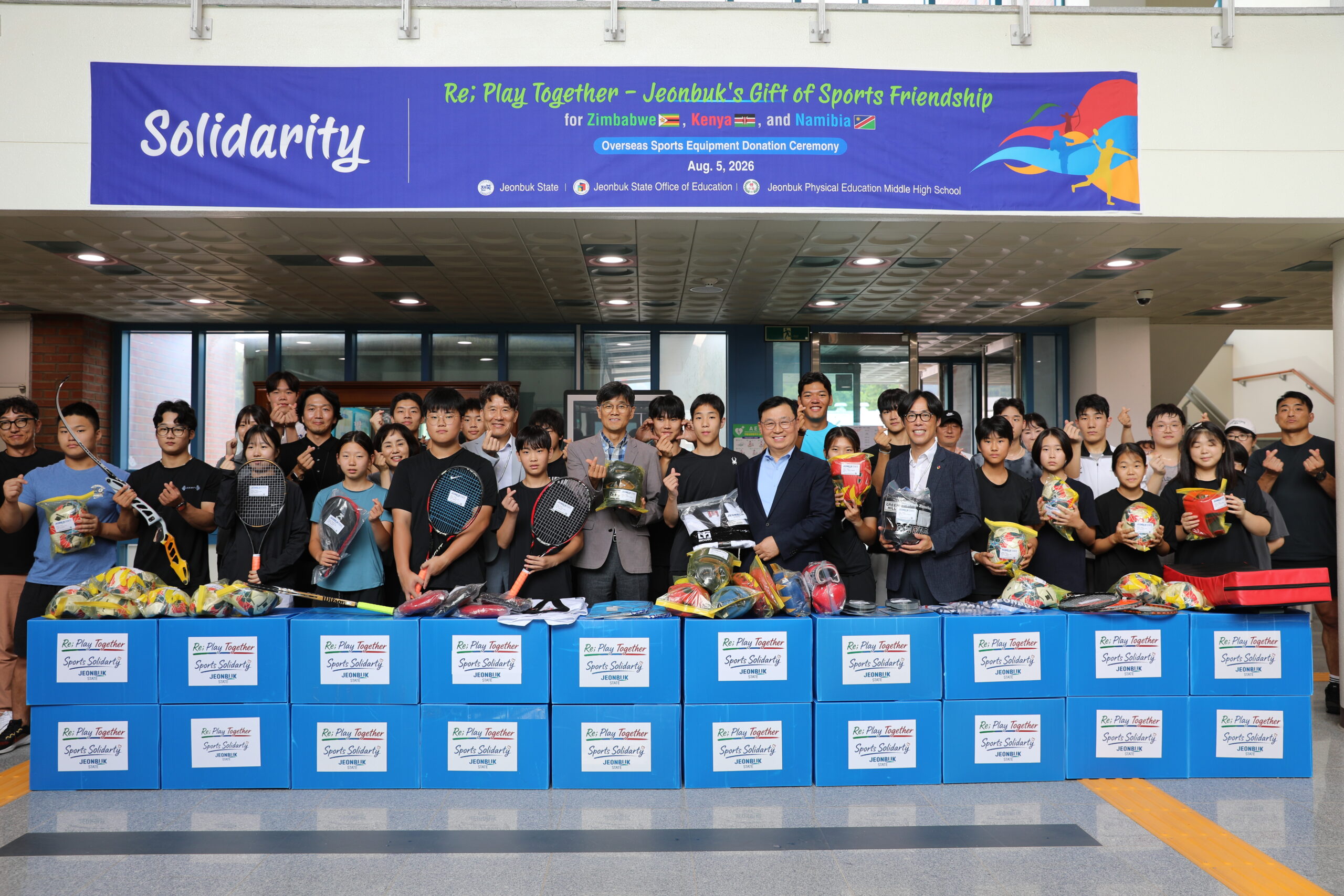
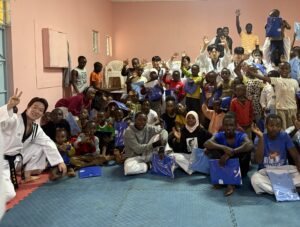
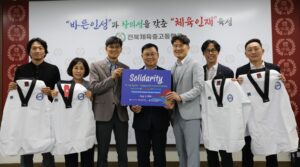
Jeonbuk State, in collaboration with the Jeonbuk State Office of Education and Jeonbuk Physicl Education Middle & High School, is continuing international exchange and friendship through sports by delivering sports equipment donated by students to youth in three African nations. On the 5th, the State and the Office of Education held a send-off ceremony at Jeonbuk Sports Middle & High School for the project titled “Re; Play Together, Jeonbuk Sports Friendship Gifts,” shipping the items to Zimbabwe, Kenya, and Namibia. The theme, ‘Re; Play Together,’ signifies resuming games (Re; Play) that had been halted due to a shortage of soccer balls and sports gear, this time together with Jeonbuk.

This initiative goes beyond mere material support; it aims to practice solidarity and friendship across borders through sports and to expand the foundation for exchange among future generations. In particular, sharing equipment that students actually used spreads the value of sharing while extending Jeonbuk’s international sports diplomacy into schools and the local community. The project originated from visits last year by officials from Zimbabwe and Namibia, with whom Jeonbuk has maintained international sports exchanges. During their visit to Jeonbuk Sports Middle & High School, they requested support for sports equipment. Students readily agreed to contribute, leading to a broader international exchange program supported by the State, the Office of Education, and the school. The donated items total 616 pieces across 12 sports, including soccer, taekwondo, shooting, archery, swimming, etc. —comprising both gear previously used by students and new items collected for this project. The equipment will be delivered to the Ministry of Sport, Recreation, Arts and Culture and National Olympic Committees of each country via Zimbabwean diplomatic missions and international shipping. It will then be distributed to young athletes and youth active in organizations such as the Kirsty Coventry Academy in Zimbabwe, the Waitaka Taekwondo Club in Kenya, and the MTC Hopsol Youth Soccer League in Namibia.
Kim Jong-phil, Director General of Jeonbuk State’s 2036 Summer Olympics Bid Department, stated: “I hope the precious sports items that nurtured the dreams of our Jeonbuk students will serve as a new source of hope for African youth. Moving forward, we will continue to promote international exchange through sports, guided by the International Olympic Committee’s (IOC) core values of inclusion and solidarity.” Im Young-gun, Director of Arts, Physical Ed & Health Division at the Jeonbuk State Office of Education, said, “It was a meaningful opportunity for our students to put into practice the spirit of sportsmanship through sharing and caring while developing a global perspective. We hope that the students’ small but heartfelt gesture will be warmly received by young people in Africa.”

Meanwhile, Jeonbuk State has been steadily expanding its international sports network by dispatching a Taekwondo demonstration team to the World Taekwondo U-21 Championship in Kenya, participating in the World Union of Olympic Cities General Assembly, and broadening sports exchanges with African nations. Starting with the “Sports Friendship Gift” pilot project, Jeonbuk State plans to consider expanding the countries and sports covered by the initiative, while also promoting the hosting of international sporting events and exchange programs inviting young athletes from overseas, with the goal of developing Jeonbuk into a specialized international sports city.
Events
”More>>”
Journalists on the podium
”More>>”
Advertisement
Young Reporter’s corner
”More>>”

Stage set for #AFCU17 and #AFCU20 Qualifiers draws

AIPS ASIA News:

Asia’s age-group national teams will embark on their quest to reach the AFC U17 Asian Cup™ 2025 and AFC U20 Asian Cup™ 2025 later this year when the Qualifiers for both kick off in October and September respectively.


Their pathways will be laid out at the official draw ceremonies on Thursday, June 13 at the Asian Football Confederation (AFC) House in Kuala Lumpur, Malaysia, with the U17 event to begin at 2pm, followed by the U20 draw at 4pm.

Qualifiers for the 20th edition of the AFC U17 Asian Cup™ will take place between October 19 and 27 and feature 43 teams, who will be divided into 10 groups – seven of four each and three of five. Meanwhile, the AFC U20 Asian Cup™ Qualifiers for the 2025 iteration, to be played from September 21 to 29, will see 45 teams split into five groups of four each and five groups of five.

All 10 group winners, along with the five best-placed runners-up, will progress to the respective final tournaments. They will be joined by the hosts, who automatically qualify – Saudi Arabia are set to stage the AFC U17 Asian Cup™ 2025, while the 42nd edition of the AFC U20 Asian Cup™ will be held in China PR, with both decisions subject to ratification by the AFC Executive Committee.

Every group of both qualifying tournaments will be contested in a centralised league format, with teams to be seeded into five pots based on their final rankings from the corresponding previous edition. At the start of the draws, the teams that will serve as centralised hosts will be separately allocated to a Hosts Pot to ensure that they will be drawn into different groups.

The pot allocations for each draw, with teams arranged according to rankings, are as follows:

AFC U17 Asian Cup™ 2025 Qualifiers
Pot 1: Japan (1), Korea Republic (2), Uzbekistan (3), Islamic Republic of Iran (4), Yemen (5), Australia (6), Malaysia (9), Afghanistan (10), Tajikistan (11)
Pot 2: India (12), Indonesia (17), Bangladesh (18), Oman (19), Iraq (21)
Pot 3: Syria (22), United Arab Emirates (23), Kyrgyz Republic (25), Mongolia (28), Brunei Darussalam (30), Bahrain (31)
Pot 4: Turkmenistan (32), Palestine (33), Nepal (34), Myanmar (35), Bhutan (36), Hong Kong, China (37), Northern Mariana Islands (38), Lebanon (39), Guam (40), Philippines (41)
Pot 5: Maldives (42), DPR Korea (NA), Macau (NA)
Hosts Pot: Thailand (8; seeded 1st), China PR (13; 2nd), Vietnam (14; 2nd), Qatar (15; 2nd), Laos (16; 2nd), Jordan (20; 2nd), Kuwait (24; 3rd), Chinese Taipei (26; 3rd), Singapore, (27; 3rd), Cambodia (29; 3rd)

AFC U20 Asian Cup™ 2025 Qualifiers
Pot 1: Uzbekistan (1), Iraq (2), Japan (3), Korea Republic (4), Australia (5), Islamic Republic of Iran (7), Jordan (8)
Pot 2: Syria (13), Oman (15), Lebanon (18), Yemen (19), Mongolia (20), Bahrain (21)
Pot 3: Malaysia (23), Bangladesh (24), Palestine (25), United Arab Emirates (26), Philippines (27), India (28), Myanmar (29), Timor-Leste (30), Singapore (31)
Pot 4: Afghanistan (32), Cambodia (33), Turkmenistan (35), Bhutan (37), Hong Kong, China (38), Sri Lanka (39), Brunei Darussalam (40), Maldives (41)
Pot 5: Nepal (42), Guam (43), Northern Mariana Islands (44), DPR Korea (NA), Macau (NA)
Hosts Pot: Vietnam (9; seeded 1st), Indonesia (10-11; 1st), Tajikistan (10-11; 1st), Saudi Arabia (12; 2nd), Kyrgyz Republic (14; 2nd), Qatar (16; 2nd), Thailand (17; 2nd), Chinese Taipei (22; 3rd), Kuwait (34; 4th), Laos (36; 4th)

Each draw will commence from the Hosts Pot, followed by Pots 5 to 1 respectively; each pot will be completely emptied before moving on to the next, with teams allocated to groups in alphabetical order.

Partners
Advertisement

Stage set for #AFCU17 and #AFCU20 Qualifiers draws

AIPS ASIA News:

Asia’s age-group national teams will embark on their quest to reach the AFC U17 Asian Cup™ 2025 and AFC U20 Asian Cup™ 2025 later this year when the Qualifiers for both kick off in October and September respectively.


Their pathways will be laid out at the official draw ceremonies on Thursday, June 13 at the Asian Football Confederation (AFC) House in Kuala Lumpur, Malaysia, with the U17 event to begin at 2pm, followed by the U20 draw at 4pm.

Qualifiers for the 20th edition of the AFC U17 Asian Cup™ will take place between October 19 and 27 and feature 43 teams, who will be divided into 10 groups – seven of four each and three of five. Meanwhile, the AFC U20 Asian Cup™ Qualifiers for the 2025 iteration, to be played from September 21 to 29, will see 45 teams split into five groups of four each and five groups of five.

All 10 group winners, along with the five best-placed runners-up, will progress to the respective final tournaments. They will be joined by the hosts, who automatically qualify – Saudi Arabia are set to stage the AFC U17 Asian Cup™ 2025, while the 42nd edition of the AFC U20 Asian Cup™ will be held in China PR, with both decisions subject to ratification by the AFC Executive Committee.

Every group of both qualifying tournaments will be contested in a centralised league format, with teams to be seeded into five pots based on their final rankings from the corresponding previous edition. At the start of the draws, the teams that will serve as centralised hosts will be separately allocated to a Hosts Pot to ensure that they will be drawn into different groups.

The pot allocations for each draw, with teams arranged according to rankings, are as follows:

AFC U17 Asian Cup™ 2025 Qualifiers
Pot 1: Japan (1), Korea Republic (2), Uzbekistan (3), Islamic Republic of Iran (4), Yemen (5), Australia (6), Malaysia (9), Afghanistan (10), Tajikistan (11)
Pot 2: India (12), Indonesia (17), Bangladesh (18), Oman (19), Iraq (21)
Pot 3: Syria (22), United Arab Emirates (23), Kyrgyz Republic (25), Mongolia (28), Brunei Darussalam (30), Bahrain (31)
Pot 4: Turkmenistan (32), Palestine (33), Nepal (34), Myanmar (35), Bhutan (36), Hong Kong, China (37), Northern Mariana Islands (38), Lebanon (39), Guam (40), Philippines (41)
Pot 5: Maldives (42), DPR Korea (NA), Macau (NA)
Hosts Pot: Thailand (8; seeded 1st), China PR (13; 2nd), Vietnam (14; 2nd), Qatar (15; 2nd), Laos (16; 2nd), Jordan (20; 2nd), Kuwait (24; 3rd), Chinese Taipei (26; 3rd), Singapore, (27; 3rd), Cambodia (29; 3rd)

AFC U20 Asian Cup™ 2025 Qualifiers
Pot 1: Uzbekistan (1), Iraq (2), Japan (3), Korea Republic (4), Australia (5), Islamic Republic of Iran (7), Jordan (8)
Pot 2: Syria (13), Oman (15), Lebanon (18), Yemen (19), Mongolia (20), Bahrain (21)
Pot 3: Malaysia (23), Bangladesh (24), Palestine (25), United Arab Emirates (26), Philippines (27), India (28), Myanmar (29), Timor-Leste (30), Singapore (31)
Pot 4: Afghanistan (32), Cambodia (33), Turkmenistan (35), Bhutan (37), Hong Kong, China (38), Sri Lanka (39), Brunei Darussalam (40), Maldives (41)
Pot 5: Nepal (42), Guam (43), Northern Mariana Islands (44), DPR Korea (NA), Macau (NA)
Hosts Pot: Vietnam (9; seeded 1st), Indonesia (10-11; 1st), Tajikistan (10-11; 1st), Saudi Arabia (12; 2nd), Kyrgyz Republic (14; 2nd), Qatar (16; 2nd), Thailand (17; 2nd), Chinese Taipei (22; 3rd), Kuwait (34; 4th), Laos (36; 4th)

Each draw will commence from the Hosts Pot, followed by Pots 5 to 1 respectively; each pot will be completely emptied before moving on to the next, with teams allocated to groups in alphabetical order.

Videos
”More>>”

Jeonbuk State, in collaboration with the Jeonbuk State Office of Education and Jeonbuk Physicl Education Middle & High School, is continuing international exchange and friendship through sports by delivering sports equipment donated by students to youth in three African nations. On the 5th, the State and the Office of Education held a send-off ceremony at Jeonbuk Sports Middle & High School for the project titled “Re; Play Together, Jeonbuk Sports Friendship Gifts,” shipping the items to Zimbabwe, Kenya, and Namibia. The theme, ‘Re; Play Together,’ signifies resuming games (Re; Play) that had been halted due to a shortage of soccer balls and sports gear, this time together with Jeonbuk.

This initiative goes beyond mere material support; it aims to practice solidarity and friendship across borders through sports and to expand the foundation for exchange among future generations. In particular, sharing equipment that students actually used spreads the value of sharing while extending Jeonbuk’s international sports diplomacy into schools and the local community. The project originated from visits last year by officials from Zimbabwe and Namibia, with whom Jeonbuk has maintained international sports exchanges. During their visit to Jeonbuk Sports Middle & High School, they requested support for sports equipment. Students readily agreed to contribute, leading to a broader international exchange program supported by the State, the Office of Education, and the school. The donated items total 616 pieces across 12 sports, including soccer, taekwondo, shooting, archery, swimming, etc. —comprising both gear previously used by students and new items collected for this project. The equipment will be delivered to the Ministry of Sport, Recreation, Arts and Culture and National Olympic Committees of each country via Zimbabwean diplomatic missions and international shipping. It will then be distributed to young athletes and youth active in organizations such as the Kirsty Coventry Academy in Zimbabwe, the Waitaka Taekwondo Club in Kenya, and the MTC Hopsol Youth Soccer League in Namibia.

Kim Jong-phil, Director General of Jeonbuk State’s 2036 Summer Olympics Bid Department, stated: “I hope the precious sports items that nurtured the dreams of our Jeonbuk students will serve as a new source of hope for African youth. Moving forward, we will continue to promote international exchange through sports, guided by the International Olympic Committee’s (IOC) core values of inclusion and solidarity.” Im Young-gun, Director of Arts, Physical Ed & Health Division at the Jeonbuk State Office of Education, said, “It was a meaningful opportunity for our students to put into practice the spirit of sportsmanship through sharing and caring while developing a global perspective. We hope that the students’ small but heartfelt gesture will be warmly received by young people in Africa.”

Meanwhile, Jeonbuk State has been steadily expanding its international sports network by dispatching a Taekwondo demonstration team to the World Taekwondo U-21 Championship in Kenya, participating in the World Union of Olympic Cities General Assembly, and broadening sports exchanges with African nations. Starting with the “Sports Friendship Gift” pilot project, Jeonbuk State plans to consider expanding the countries and sports covered by the initiative, while also promoting the hosting of international sporting events and exchange programs inviting young athletes from overseas, with the goal of developing Jeonbuk into a specialized international sports city.

Events
”More>>”
Journalists on the podium
”More>>”
Advertisement
Young Reporter’s corner
”More>>”
Partners
Advertisement

All News

Video Gallery