Videos
”More>>”

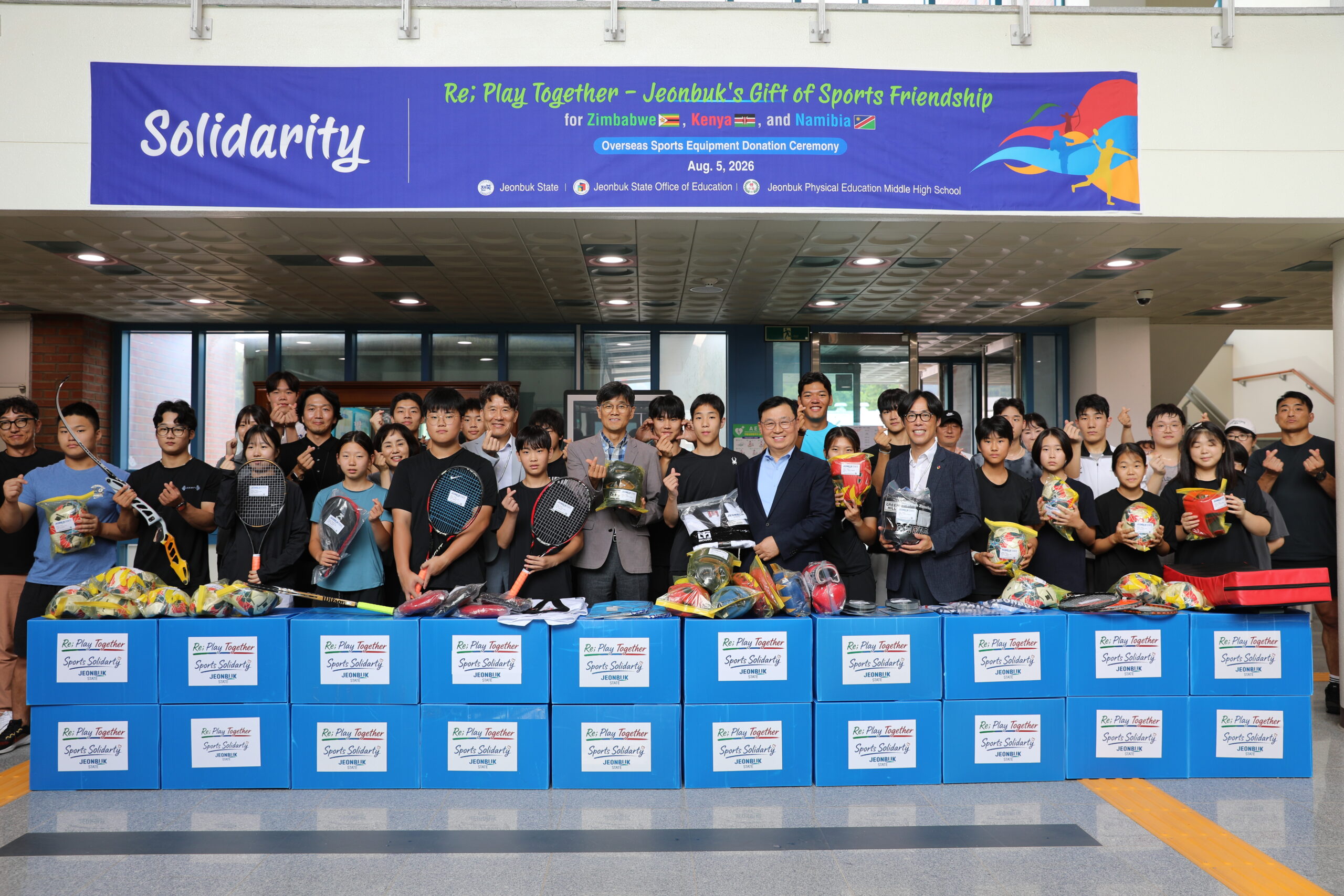
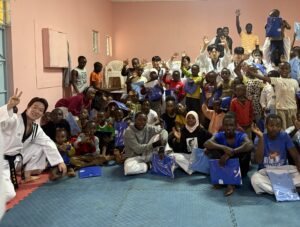
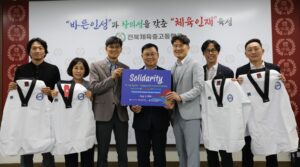
Jeonbuk State, in collaboration with the Jeonbuk State Office of Education and Jeonbuk Physicl Education Middle & High School, is continuing international exchange and friendship through sports by delivering sports equipment donated by students to youth in three African nations. On the 5th, the State and the Office of Education held a send-off ceremony at Jeonbuk Sports Middle & High School for the project titled “Re; Play Together, Jeonbuk Sports Friendship Gifts,” shipping the items to Zimbabwe, Kenya, and Namibia. The theme, ‘Re; Play Together,’ signifies resuming games (Re; Play) that had been halted due to a shortage of soccer balls and sports gear, this time together with Jeonbuk.

This initiative goes beyond mere material support; it aims to practice solidarity and friendship across borders through sports and to expand the foundation for exchange among future generations. In particular, sharing equipment that students actually used spreads the value of sharing while extending Jeonbuk’s international sports diplomacy into schools and the local community. The project originated from visits last year by officials from Zimbabwe and Namibia, with whom Jeonbuk has maintained international sports exchanges. During their visit to Jeonbuk Sports Middle & High School, they requested support for sports equipment. Students readily agreed to contribute, leading to a broader international exchange program supported by the State, the Office of Education, and the school. The donated items total 616 pieces across 12 sports, including soccer, taekwondo, shooting, archery, swimming, etc. —comprising both gear previously used by students and new items collected for this project. The equipment will be delivered to the Ministry of Sport, Recreation, Arts and Culture and National Olympic Committees of each country via Zimbabwean diplomatic missions and international shipping. It will then be distributed to young athletes and youth active in organizations such as the Kirsty Coventry Academy in Zimbabwe, the Waitaka Taekwondo Club in Kenya, and the MTC Hopsol Youth Soccer League in Namibia.
Kim Jong-phil, Director General of Jeonbuk State’s 2036 Summer Olympics Bid Department, stated: “I hope the precious sports items that nurtured the dreams of our Jeonbuk students will serve as a new source of hope for African youth. Moving forward, we will continue to promote international exchange through sports, guided by the International Olympic Committee’s (IOC) core values of inclusion and solidarity.” Im Young-gun, Director of Arts, Physical Ed & Health Division at the Jeonbuk State Office of Education, said, “It was a meaningful opportunity for our students to put into practice the spirit of sportsmanship through sharing and caring while developing a global perspective. We hope that the students’ small but heartfelt gesture will be warmly received by young people in Africa.”

Meanwhile, Jeonbuk State has been steadily expanding its international sports network by dispatching a Taekwondo demonstration team to the World Taekwondo U-21 Championship in Kenya, participating in the World Union of Olympic Cities General Assembly, and broadening sports exchanges with African nations. Starting with the “Sports Friendship Gift” pilot project, Jeonbuk State plans to consider expanding the countries and sports covered by the initiative, while also promoting the hosting of international sporting events and exchange programs inviting young athletes from overseas, with the goal of developing Jeonbuk into a specialized international sports city.
Events
”More>>”
Journalists on the podium
”More>>”
Advertisement
Young Reporter’s corner
”More>>”

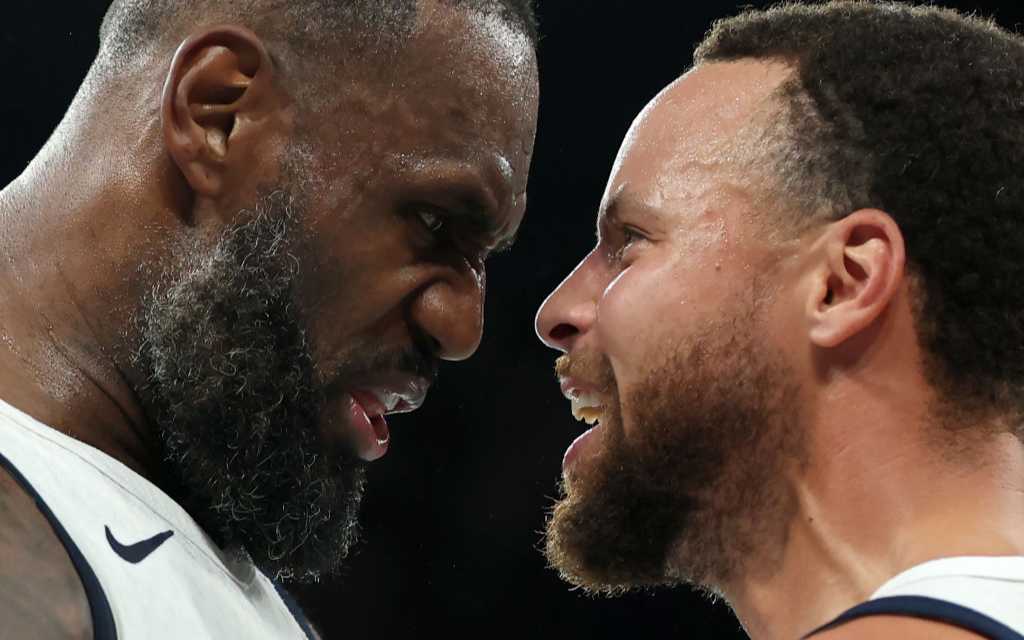
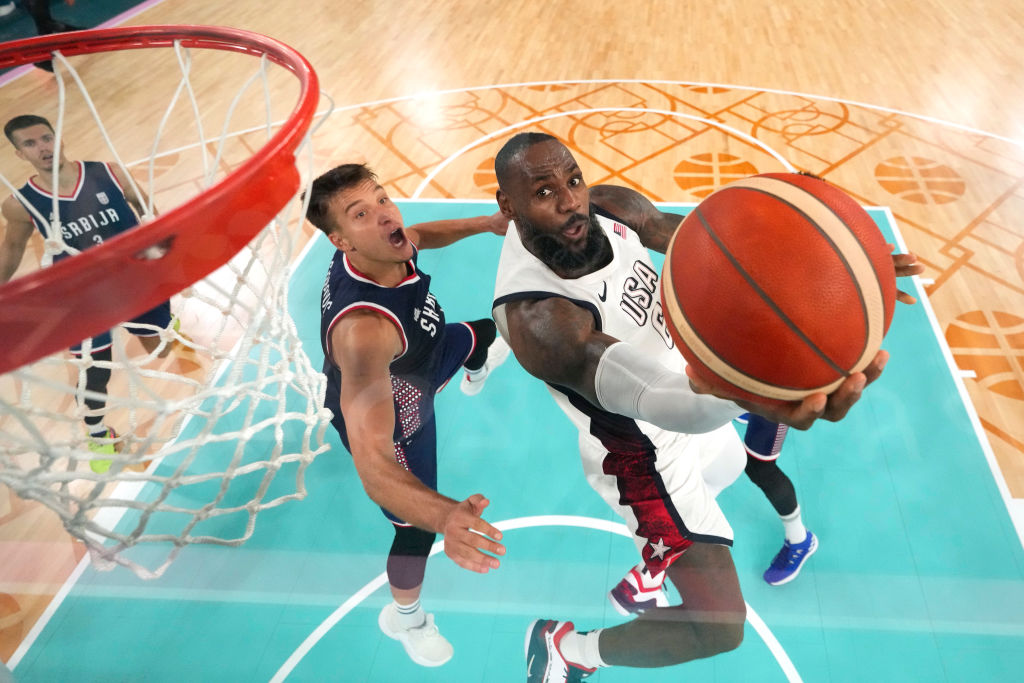
Angry LeBron and fantastic Curry rescue USA in an Olympic thriller against Serbia

LeBron and Curry celebrate as USA beat Serbia 95-91 at Bercy Arena (Photo by Gregory Shamus/Getty Images)

AIPS ASIA News:

PARIS, August 9, 2024 – Filip Petrusev was born on 15 April 2000. At that time, in Ohio, LeBron James was already 2.01 metres high and would be soon featured on the cover of Sports Illustrated, the first high school basketballer to do so.


Yet here they are today, facing each other at Bercy Arena, one as a 39-year-old, all-time scorer of the NBA, two Olympic gold medals, respected and admired by the sports world; and the other, who plays at Panathinaikos after a forgettable NBA experience, thinking that trash-talking and winding up LeBron could be a good idea for his team’s strategy.

As Serbia took the 17-point lead (45-22), Petrusev grinned directly at LeBron’s sons, igniting his immediate reaction. And LeBron, whose contribution to the game had been limited until then, switched to angry-LeBron mode, becoming the team’s soul (16 points, 10 assists, 12 rebounds) in a spectacular comeback and an Olympic semi-final to be remembered.

It was 95-91, a miraculous effort after the Dream Team had lost the first three quarters (23-31, 20-23, 20-22) and Serbia managed to be 17 points ahead with a brilliant zonal marking, that they have never performed against the USA before. But FIBA-style marking was mixed with too much talking. And anyone could immediate sense that they might be shooting themselves in the the foot.

RECORD CURRY And the USA had Stephen Curry, who was not interested in engaging in any arguments, but on shooting from every possible angle as if it was an all-star game competition. His 36 points were the highest individual score in an Olympic semi-final. With the atmosphere heating up in the fourth quarter, he even took the shots from the line smiling. Although with Curry alone the comeback wouldn’t have been possible.

ROCK-SOLID EMBIID Not without Joel Embiid, who had to face a constant booing from the French fans since minute 1, and yet emerged as the winner in the one-to-one against Jokic.

On top of them, there was also Kevin Durant, whose contribution in the last quarter helped to sink Serbia’s hopes.

LeBron James scored the fifth triple-double in the history of Olympics and his personal second. (Photo: Getty Images)

KING JAMES But the real soul of the comeback was LeBron James, who at 39 has signed the fourth triple-double in the history of Olympics: one belonged to him, one to Alexander Belov in 1976 and one to Luka Doncic in 2021.

Lacking the in-depth of the USA, Serbia relied too much on their stars. Jokic played 37 minutes. In the last quarter, when he was most needed, his batteries were dried up. 32-15 in the last quarter is a result that speaks for itself. They started 63-76 and levelled 84-84 with 3:41 to end.  The first time they were winning was with 2:24 remaining, 87-86, thanks to Curry’s three-pointer. Then followed LeBron (2), Curry (2), Bogdanovic (2) and Durant (2), to retain the four-point lead with 34 seconds to go. Avramovic pulled back to 93-91, and then Curry, with two free-throws, sealed the final 95-91. The last rebound was captured by no other than LeBron.

Serbian players ended up insulting the referees. But a technical or a walking call didn’t change the course of the game. It was LeBron – correction, angry-Lebron – who did it. And for that, Serbians need to point the finger to themselves. It was the second time in Olympic history that a team that had lost the first three quarters, ends up winning the game. The previous was Lithuania against Croatia in Beijing.

The USA will now go for the gold against hosts France, repeating the Olympic final of Tokyo three years ago. Serbia will battle for the bronze against Germany, with the feeling that they could have been in the crucial game. But playing a perfect game for three quarters don’t guarantee a victory, especially now if you’ve managed to turn LeBron in angry-LeBron.

Partners
Advertisement

Angry LeBron and fantastic Curry rescue USA in an Olympic thriller against Serbia

LeBron and Curry celebrate as USA beat Serbia 95-91 at Bercy Arena (Photo by Gregory Shamus/Getty Images)

AIPS ASIA News:

PARIS, August 9, 2024 – Filip Petrusev was born on 15 April 2000. At that time, in Ohio, LeBron James was already 2.01 metres high and would be soon featured on the cover of Sports Illustrated, the first high school basketballer to do so.


Yet here they are today, facing each other at Bercy Arena, one as a 39-year-old, all-time scorer of the NBA, two Olympic gold medals, respected and admired by the sports world; and the other, who plays at Panathinaikos after a forgettable NBA experience, thinking that trash-talking and winding up LeBron could be a good idea for his team’s strategy.

As Serbia took the 17-point lead (45-22), Petrusev grinned directly at LeBron’s sons, igniting his immediate reaction. And LeBron, whose contribution to the game had been limited until then, switched to angry-LeBron mode, becoming the team’s soul (16 points, 10 assists, 12 rebounds) in a spectacular comeback and an Olympic semi-final to be remembered.

It was 95-91, a miraculous effort after the Dream Team had lost the first three quarters (23-31, 20-23, 20-22) and Serbia managed to be 17 points ahead with a brilliant zonal marking, that they have never performed against the USA before. But FIBA-style marking was mixed with too much talking. And anyone could immediate sense that they might be shooting themselves in the the foot.

RECORD CURRY And the USA had Stephen Curry, who was not interested in engaging in any arguments, but on shooting from every possible angle as if it was an all-star game competition. His 36 points were the highest individual score in an Olympic semi-final. With the atmosphere heating up in the fourth quarter, he even took the shots from the line smiling. Although with Curry alone the comeback wouldn’t have been possible.

ROCK-SOLID EMBIID Not without Joel Embiid, who had to face a constant booing from the French fans since minute 1, and yet emerged as the winner in the one-to-one against Jokic.

On top of them, there was also Kevin Durant, whose contribution in the last quarter helped to sink Serbia’s hopes.

LeBron James scored the fifth triple-double in the history of Olympics and his personal second. (Photo: Getty Images)

KING JAMES But the real soul of the comeback was LeBron James, who at 39 has signed the fourth triple-double in the history of Olympics: one belonged to him, one to Alexander Belov in 1976 and one to Luka Doncic in 2021.

Lacking the in-depth of the USA, Serbia relied too much on their stars. Jokic played 37 minutes. In the last quarter, when he was most needed, his batteries were dried up. 32-15 in the last quarter is a result that speaks for itself. They started 63-76 and levelled 84-84 with 3:41 to end.  The first time they were winning was with 2:24 remaining, 87-86, thanks to Curry’s three-pointer. Then followed LeBron (2), Curry (2), Bogdanovic (2) and Durant (2), to retain the four-point lead with 34 seconds to go. Avramovic pulled back to 93-91, and then Curry, with two free-throws, sealed the final 95-91. The last rebound was captured by no other than LeBron.

Serbian players ended up insulting the referees. But a technical or a walking call didn’t change the course of the game. It was LeBron – correction, angry-Lebron – who did it. And for that, Serbians need to point the finger to themselves. It was the second time in Olympic history that a team that had lost the first three quarters, ends up winning the game. The previous was Lithuania against Croatia in Beijing.

The USA will now go for the gold against hosts France, repeating the Olympic final of Tokyo three years ago. Serbia will battle for the bronze against Germany, with the feeling that they could have been in the crucial game. But playing a perfect game for three quarters don’t guarantee a victory, especially now if you’ve managed to turn LeBron in angry-LeBron.

Videos
”More>>”

Jeonbuk State, in collaboration with the Jeonbuk State Office of Education and Jeonbuk Physicl Education Middle & High School, is continuing international exchange and friendship through sports by delivering sports equipment donated by students to youth in three African nations. On the 5th, the State and the Office of Education held a send-off ceremony at Jeonbuk Sports Middle & High School for the project titled “Re; Play Together, Jeonbuk Sports Friendship Gifts,” shipping the items to Zimbabwe, Kenya, and Namibia. The theme, ‘Re; Play Together,’ signifies resuming games (Re; Play) that had been halted due to a shortage of soccer balls and sports gear, this time together with Jeonbuk.

This initiative goes beyond mere material support; it aims to practice solidarity and friendship across borders through sports and to expand the foundation for exchange among future generations. In particular, sharing equipment that students actually used spreads the value of sharing while extending Jeonbuk’s international sports diplomacy into schools and the local community. The project originated from visits last year by officials from Zimbabwe and Namibia, with whom Jeonbuk has maintained international sports exchanges. During their visit to Jeonbuk Sports Middle & High School, they requested support for sports equipment. Students readily agreed to contribute, leading to a broader international exchange program supported by the State, the Office of Education, and the school. The donated items total 616 pieces across 12 sports, including soccer, taekwondo, shooting, archery, swimming, etc. —comprising both gear previously used by students and new items collected for this project. The equipment will be delivered to the Ministry of Sport, Recreation, Arts and Culture and National Olympic Committees of each country via Zimbabwean diplomatic missions and international shipping. It will then be distributed to young athletes and youth active in organizations such as the Kirsty Coventry Academy in Zimbabwe, the Waitaka Taekwondo Club in Kenya, and the MTC Hopsol Youth Soccer League in Namibia.

Kim Jong-phil, Director General of Jeonbuk State’s 2036 Summer Olympics Bid Department, stated: “I hope the precious sports items that nurtured the dreams of our Jeonbuk students will serve as a new source of hope for African youth. Moving forward, we will continue to promote international exchange through sports, guided by the International Olympic Committee’s (IOC) core values of inclusion and solidarity.” Im Young-gun, Director of Arts, Physical Ed & Health Division at the Jeonbuk State Office of Education, said, “It was a meaningful opportunity for our students to put into practice the spirit of sportsmanship through sharing and caring while developing a global perspective. We hope that the students’ small but heartfelt gesture will be warmly received by young people in Africa.”

Meanwhile, Jeonbuk State has been steadily expanding its international sports network by dispatching a Taekwondo demonstration team to the World Taekwondo U-21 Championship in Kenya, participating in the World Union of Olympic Cities General Assembly, and broadening sports exchanges with African nations. Starting with the “Sports Friendship Gift” pilot project, Jeonbuk State plans to consider expanding the countries and sports covered by the initiative, while also promoting the hosting of international sporting events and exchange programs inviting young athletes from overseas, with the goal of developing Jeonbuk into a specialized international sports city.

Events
”More>>”
Journalists on the podium
”More>>”
Advertisement
Young Reporter’s corner
”More>>”
Partners
Advertisement

All News

Video Gallery