Videos
”More>>”

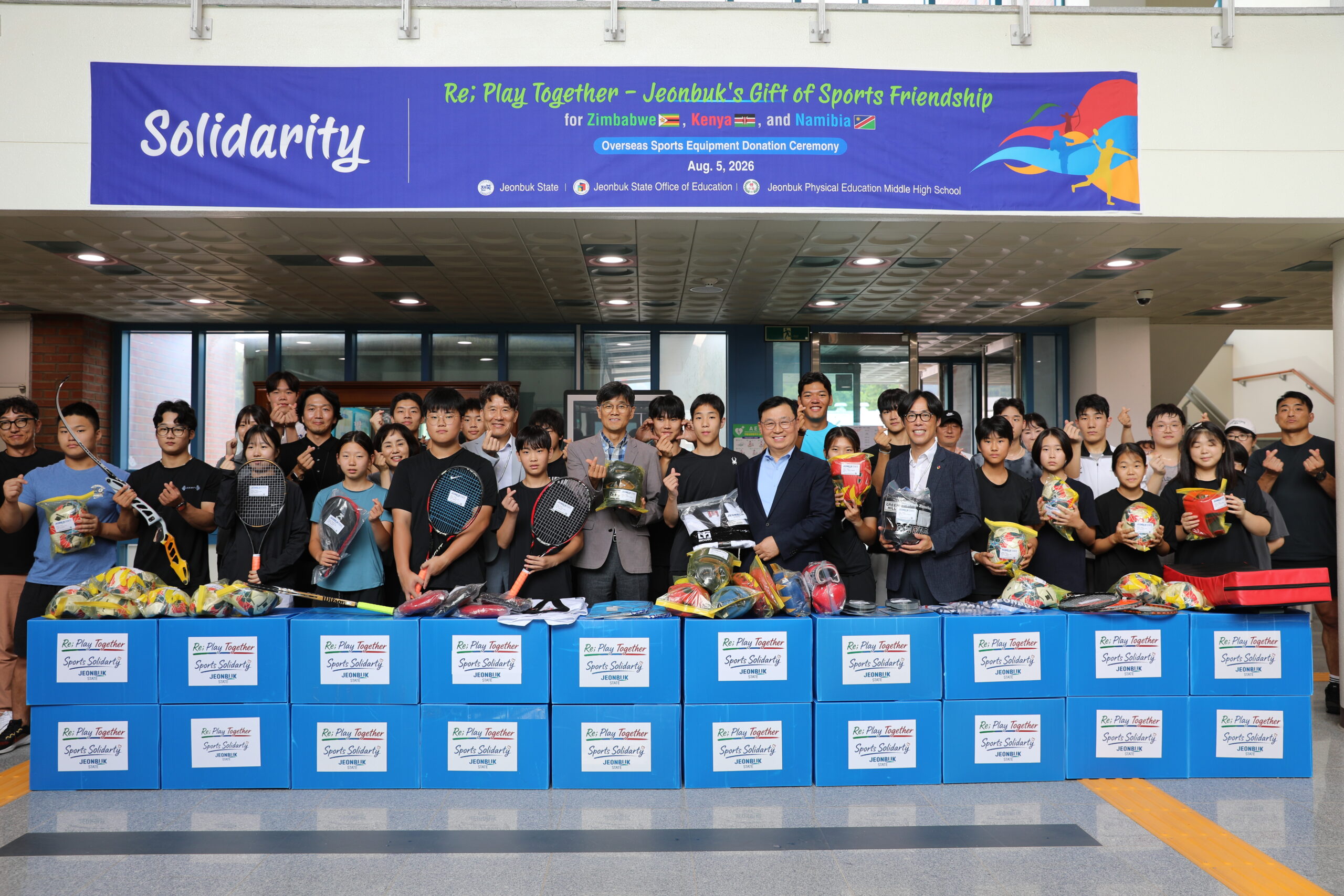
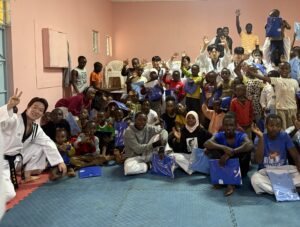
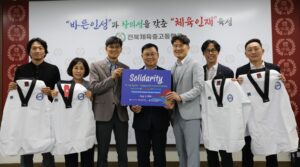
Jeonbuk State, in collaboration with the Jeonbuk State Office of Education and Jeonbuk Physicl Education Middle & High School, is continuing international exchange and friendship through sports by delivering sports equipment donated by students to youth in three African nations. On the 5th, the State and the Office of Education held a send-off ceremony at Jeonbuk Sports Middle & High School for the project titled “Re; Play Together, Jeonbuk Sports Friendship Gifts,” shipping the items to Zimbabwe, Kenya, and Namibia. The theme, ‘Re; Play Together,’ signifies resuming games (Re; Play) that had been halted due to a shortage of soccer balls and sports gear, this time together with Jeonbuk.

This initiative goes beyond mere material support; it aims to practice solidarity and friendship across borders through sports and to expand the foundation for exchange among future generations. In particular, sharing equipment that students actually used spreads the value of sharing while extending Jeonbuk’s international sports diplomacy into schools and the local community. The project originated from visits last year by officials from Zimbabwe and Namibia, with whom Jeonbuk has maintained international sports exchanges. During their visit to Jeonbuk Sports Middle & High School, they requested support for sports equipment. Students readily agreed to contribute, leading to a broader international exchange program supported by the State, the Office of Education, and the school. The donated items total 616 pieces across 12 sports, including soccer, taekwondo, shooting, archery, swimming, etc. —comprising both gear previously used by students and new items collected for this project. The equipment will be delivered to the Ministry of Sport, Recreation, Arts and Culture and National Olympic Committees of each country via Zimbabwean diplomatic missions and international shipping. It will then be distributed to young athletes and youth active in organizations such as the Kirsty Coventry Academy in Zimbabwe, the Waitaka Taekwondo Club in Kenya, and the MTC Hopsol Youth Soccer League in Namibia.
Kim Jong-phil, Director General of Jeonbuk State’s 2036 Summer Olympics Bid Department, stated: “I hope the precious sports items that nurtured the dreams of our Jeonbuk students will serve as a new source of hope for African youth. Moving forward, we will continue to promote international exchange through sports, guided by the International Olympic Committee’s (IOC) core values of inclusion and solidarity.” Im Young-gun, Director of Arts, Physical Ed & Health Division at the Jeonbuk State Office of Education, said, “It was a meaningful opportunity for our students to put into practice the spirit of sportsmanship through sharing and caring while developing a global perspective. We hope that the students’ small but heartfelt gesture will be warmly received by young people in Africa.”

Meanwhile, Jeonbuk State has been steadily expanding its international sports network by dispatching a Taekwondo demonstration team to the World Taekwondo U-21 Championship in Kenya, participating in the World Union of Olympic Cities General Assembly, and broadening sports exchanges with African nations. Starting with the “Sports Friendship Gift” pilot project, Jeonbuk State plans to consider expanding the countries and sports covered by the initiative, while also promoting the hosting of international sporting events and exchange programs inviting young athletes from overseas, with the goal of developing Jeonbuk into a specialized international sports city.
Events
”More>>”
Journalists on the podium
”More>>”
Advertisement
Young Reporter’s corner
”More>>”

Asia’s best vie for continental glory at #WAC2026

Kuala Lumpur, February 23, 2026: The grandest spectacle of women’s football on the Continent will commence when 12 of Asia’s finest women’s national teams converge Down Under for the AFC Women’s Asian Cup Australia 2026™, which kicks off on March 1. The 21st edition of the competition will take place from March 1 to 21, 2026, across Perth, Gold Coast, and Sydney, featuring spectacular venues, including those used during the FIFA Women’s World Cup Australia & New Zealand 2023, as the tournament returns to Australia for the first time since 2006. Hosts Australia kick off Group A when they face the Philippines at the 60,000-capacity Perth Stadium at 5pm on March 1. Backed by home support, the Matildas aim to reclaim the title they last won in 2010, while the Filipinas seek to better their 2022 showing when they reached the Semi-finals for the first time.

Elsewhere in Group A, 2022 runners-up Korea Republic embark on their journey on March 2 against the Islamic Republic of Iran at the Gold Coast Stadium at 7pm. Despite taking part in every edition of the Finals since 1991, the Taeguk Ladies continue their search for a maiden title, while IR Iran, appearing in the competition for the second time, will look to claim their first points in the Continental showpiece. Over in Group B, action begins when the Western Sydney Stadium welcomes DPR Korea and Uzbekistan on March 3 at 1pm. Returning to the competition for the first time since 2010, the East Asians, one of the most successful teams in the tournament’s history, arrive determined to revive their glory days, having been crowned champions thrice in the past. Meanwhile, Uzbekistan, who sealed their place in the Finals after a nail-biting qualifying campaign that went down to the wire, will set their sights on reaching the Knockout Stage for the first time. The venue continues to see further action when, at 7pm, defending champions China PR lock horns with debutants Bangladesh in the second Group B fixture. The most decorated side in the competition, with a record nine titles to their name, the Steel Roses begin their defence eager to start strong against the South Asian debutants, looking for an opportunity to upset the established order.

Finally, in Group C, an enticing clash between two former champions, Japan and Chinese Taipei, sets the ball rolling at Perth Rectangular Stadium on March 4, at 1pm.  The Nadeshiko go in pursuit of a third title but must first overcome their East Asian rivals, who, despite winning the competition three consecutive times between 1977 and 1981, have since seen their dominance wane, with Australia 2026 marking their first back-to-back Finals appearance since 2008. At the same venue, the remaining Group C sides, Vietnam and India, cross swords later in the day at 7pm. The Southeast Asians, despite featuring in every Finals edition since 1999, have progressed past the Group Stage only twice and aim to improve on their 2022 Quarter-final finish. On the other hand, the Blue Tigresses, runners-up in 1980 and 1983 and appearing in the Finals on merit for the first time, will be seeking to punch their ticket to the last eight and make up for their unfortunate withdrawal from the previous edition on home soil. On completion of the Group Stage battles, the top two sides from each group and the two best third-placed teams will secure their places in the Knockout Stage.

Beyond Continental glory, this will also mark the final time the Continental jewel determines Asia’s representatives at the FIFA Women’s World Cup. The four Semi-finalists will secure direct qualification to the 2027 global showpiece; meanwhile, the four losing Quarter-finalists will be paired off to contest Playoff matches, with the two winners progressing to the FIFA Women’s World Cup and the two defeated sides moving to the FIFA Inter-continental Playoffs, where three more berths are on offer. With world-class venues and passionate supporters, Asia’s elite will vie for glory at an AFC Women’s Asian Cup Australia 2026™ that promises three weeks of captivating action.

Partners
Advertisement

Asia’s best vie for continental glory at #WAC2026

Kuala Lumpur, February 23, 2026: The grandest spectacle of women’s football on the Continent will commence when 12 of Asia’s finest women’s national teams converge Down Under for the AFC Women’s Asian Cup Australia 2026™, which kicks off on March 1. The 21st edition of the competition will take place from March 1 to 21, 2026, across Perth, Gold Coast, and Sydney, featuring spectacular venues, including those used during the FIFA Women’s World Cup Australia & New Zealand 2023, as the tournament returns to Australia for the first time since 2006. Hosts Australia kick off Group A when they face the Philippines at the 60,000-capacity Perth Stadium at 5pm on March 1. Backed by home support, the Matildas aim to reclaim the title they last won in 2010, while the Filipinas seek to better their 2022 showing when they reached the Semi-finals for the first time.

Elsewhere in Group A, 2022 runners-up Korea Republic embark on their journey on March 2 against the Islamic Republic of Iran at the Gold Coast Stadium at 7pm. Despite taking part in every edition of the Finals since 1991, the Taeguk Ladies continue their search for a maiden title, while IR Iran, appearing in the competition for the second time, will look to claim their first points in the Continental showpiece. Over in Group B, action begins when the Western Sydney Stadium welcomes DPR Korea and Uzbekistan on March 3 at 1pm. Returning to the competition for the first time since 2010, the East Asians, one of the most successful teams in the tournament’s history, arrive determined to revive their glory days, having been crowned champions thrice in the past. Meanwhile, Uzbekistan, who sealed their place in the Finals after a nail-biting qualifying campaign that went down to the wire, will set their sights on reaching the Knockout Stage for the first time. The venue continues to see further action when, at 7pm, defending champions China PR lock horns with debutants Bangladesh in the second Group B fixture. The most decorated side in the competition, with a record nine titles to their name, the Steel Roses begin their defence eager to start strong against the South Asian debutants, looking for an opportunity to upset the established order.

Finally, in Group C, an enticing clash between two former champions, Japan and Chinese Taipei, sets the ball rolling at Perth Rectangular Stadium on March 4, at 1pm.  The Nadeshiko go in pursuit of a third title but must first overcome their East Asian rivals, who, despite winning the competition three consecutive times between 1977 and 1981, have since seen their dominance wane, with Australia 2026 marking their first back-to-back Finals appearance since 2008. At the same venue, the remaining Group C sides, Vietnam and India, cross swords later in the day at 7pm. The Southeast Asians, despite featuring in every Finals edition since 1999, have progressed past the Group Stage only twice and aim to improve on their 2022 Quarter-final finish. On the other hand, the Blue Tigresses, runners-up in 1980 and 1983 and appearing in the Finals on merit for the first time, will be seeking to punch their ticket to the last eight and make up for their unfortunate withdrawal from the previous edition on home soil. On completion of the Group Stage battles, the top two sides from each group and the two best third-placed teams will secure their places in the Knockout Stage.

Beyond Continental glory, this will also mark the final time the Continental jewel determines Asia’s representatives at the FIFA Women’s World Cup. The four Semi-finalists will secure direct qualification to the 2027 global showpiece; meanwhile, the four losing Quarter-finalists will be paired off to contest Playoff matches, with the two winners progressing to the FIFA Women’s World Cup and the two defeated sides moving to the FIFA Inter-continental Playoffs, where three more berths are on offer. With world-class venues and passionate supporters, Asia’s elite will vie for glory at an AFC Women’s Asian Cup Australia 2026™ that promises three weeks of captivating action.

Videos
”More>>”

Jeonbuk State, in collaboration with the Jeonbuk State Office of Education and Jeonbuk Physicl Education Middle & High School, is continuing international exchange and friendship through sports by delivering sports equipment donated by students to youth in three African nations. On the 5th, the State and the Office of Education held a send-off ceremony at Jeonbuk Sports Middle & High School for the project titled “Re; Play Together, Jeonbuk Sports Friendship Gifts,” shipping the items to Zimbabwe, Kenya, and Namibia. The theme, ‘Re; Play Together,’ signifies resuming games (Re; Play) that had been halted due to a shortage of soccer balls and sports gear, this time together with Jeonbuk.

This initiative goes beyond mere material support; it aims to practice solidarity and friendship across borders through sports and to expand the foundation for exchange among future generations. In particular, sharing equipment that students actually used spreads the value of sharing while extending Jeonbuk’s international sports diplomacy into schools and the local community. The project originated from visits last year by officials from Zimbabwe and Namibia, with whom Jeonbuk has maintained international sports exchanges. During their visit to Jeonbuk Sports Middle & High School, they requested support for sports equipment. Students readily agreed to contribute, leading to a broader international exchange program supported by the State, the Office of Education, and the school. The donated items total 616 pieces across 12 sports, including soccer, taekwondo, shooting, archery, swimming, etc. —comprising both gear previously used by students and new items collected for this project. The equipment will be delivered to the Ministry of Sport, Recreation, Arts and Culture and National Olympic Committees of each country via Zimbabwean diplomatic missions and international shipping. It will then be distributed to young athletes and youth active in organizations such as the Kirsty Coventry Academy in Zimbabwe, the Waitaka Taekwondo Club in Kenya, and the MTC Hopsol Youth Soccer League in Namibia.

Kim Jong-phil, Director General of Jeonbuk State’s 2036 Summer Olympics Bid Department, stated: “I hope the precious sports items that nurtured the dreams of our Jeonbuk students will serve as a new source of hope for African youth. Moving forward, we will continue to promote international exchange through sports, guided by the International Olympic Committee’s (IOC) core values of inclusion and solidarity.” Im Young-gun, Director of Arts, Physical Ed & Health Division at the Jeonbuk State Office of Education, said, “It was a meaningful opportunity for our students to put into practice the spirit of sportsmanship through sharing and caring while developing a global perspective. We hope that the students’ small but heartfelt gesture will be warmly received by young people in Africa.”

Meanwhile, Jeonbuk State has been steadily expanding its international sports network by dispatching a Taekwondo demonstration team to the World Taekwondo U-21 Championship in Kenya, participating in the World Union of Olympic Cities General Assembly, and broadening sports exchanges with African nations. Starting with the “Sports Friendship Gift” pilot project, Jeonbuk State plans to consider expanding the countries and sports covered by the initiative, while also promoting the hosting of international sporting events and exchange programs inviting young athletes from overseas, with the goal of developing Jeonbuk into a specialized international sports city.

Events
”More>>”
Journalists on the podium
”More>>”
Advertisement
Young Reporter’s corner
”More>>”
Partners
Advertisement

All News

Video Gallery