Videos
”More>>”

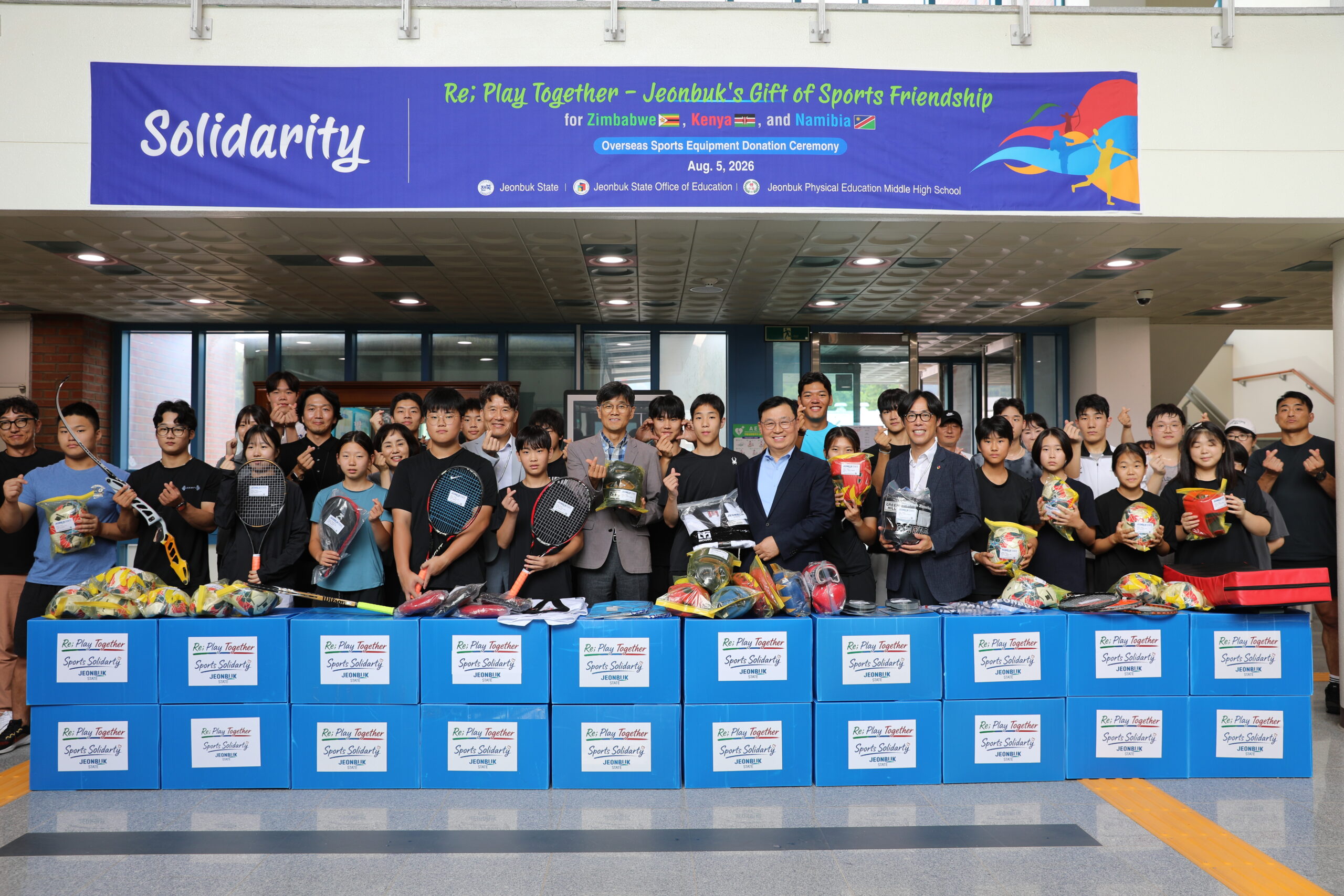
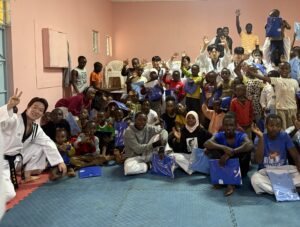
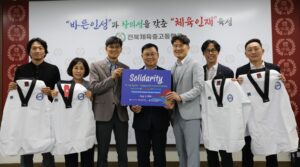
Jeonbuk State, in collaboration with the Jeonbuk State Office of Education and Jeonbuk Physicl Education Middle & High School, is continuing international exchange and friendship through sports by delivering sports equipment donated by students to youth in three African nations. On the 5th, the State and the Office of Education held a send-off ceremony at Jeonbuk Sports Middle & High School for the project titled “Re; Play Together, Jeonbuk Sports Friendship Gifts,” shipping the items to Zimbabwe, Kenya, and Namibia. The theme, ‘Re; Play Together,’ signifies resuming games (Re; Play) that had been halted due to a shortage of soccer balls and sports gear, this time together with Jeonbuk.

This initiative goes beyond mere material support; it aims to practice solidarity and friendship across borders through sports and to expand the foundation for exchange among future generations. In particular, sharing equipment that students actually used spreads the value of sharing while extending Jeonbuk’s international sports diplomacy into schools and the local community. The project originated from visits last year by officials from Zimbabwe and Namibia, with whom Jeonbuk has maintained international sports exchanges. During their visit to Jeonbuk Sports Middle & High School, they requested support for sports equipment. Students readily agreed to contribute, leading to a broader international exchange program supported by the State, the Office of Education, and the school. The donated items total 616 pieces across 12 sports, including soccer, taekwondo, shooting, archery, swimming, etc. —comprising both gear previously used by students and new items collected for this project. The equipment will be delivered to the Ministry of Sport, Recreation, Arts and Culture and National Olympic Committees of each country via Zimbabwean diplomatic missions and international shipping. It will then be distributed to young athletes and youth active in organizations such as the Kirsty Coventry Academy in Zimbabwe, the Waitaka Taekwondo Club in Kenya, and the MTC Hopsol Youth Soccer League in Namibia.
Kim Jong-phil, Director General of Jeonbuk State’s 2036 Summer Olympics Bid Department, stated: “I hope the precious sports items that nurtured the dreams of our Jeonbuk students will serve as a new source of hope for African youth. Moving forward, we will continue to promote international exchange through sports, guided by the International Olympic Committee’s (IOC) core values of inclusion and solidarity.” Im Young-gun, Director of Arts, Physical Ed & Health Division at the Jeonbuk State Office of Education, said, “It was a meaningful opportunity for our students to put into practice the spirit of sportsmanship through sharing and caring while developing a global perspective. We hope that the students’ small but heartfelt gesture will be warmly received by young people in Africa.”

Meanwhile, Jeonbuk State has been steadily expanding its international sports network by dispatching a Taekwondo demonstration team to the World Taekwondo U-21 Championship in Kenya, participating in the World Union of Olympic Cities General Assembly, and broadening sports exchanges with African nations. Starting with the “Sports Friendship Gift” pilot project, Jeonbuk State plans to consider expanding the countries and sports covered by the initiative, while also promoting the hosting of international sporting events and exchange programs inviting young athletes from overseas, with the goal of developing Jeonbuk into a specialized international sports city.
Events
”More>>”
Journalists on the podium
”More>>”
Advertisement
Young Reporter’s corner
”More>>”

FIH Hockey Pro League: Mid-season Interview with Janneke Schopman

AIPS ASIA News:

With the second half of the FIH Hockey Pro League 2024-25 fast approaching, we are catching up with players and coaches of all nine men’s and women’s teams to take the temperature of their season through the first half and explore their targets for the remaining matches. In today’s interview, we speak with Janneke Schopman, coach of the German women’s hockey team, Die Danas.


The first half of the FIH Pro League is in the books – what’s your assessment so far, and how satisfied are you with the team’s development?

We’ve been quite inconsistent – that’s probably the most accurate way to describe it. With a young and new group, we had a decent start. In India, I actually think our performances improved, but the results didn’t reflect that. That’s often the case with a developing team. Overall, I’m happy with the direction we’re going, but we definitely need to take the next step in June.

What tactical takeaways have you gathered so far – and where do you currently see the greatest need for improvement?

As a new coach, it’s been important for me to step back and observe first – to get a sense of where our strengths lie before trying to change too much. I’ve learned a lot over the past few months. A clear area of focus for us right now is our penalty corner play – both attacking and defending. That’s where we need to make real progress and start having more impact.

How would you rate the intensity and level of competition so far – particularly compared to other international tournaments?

It’s international hockey – it’s the Pro League – so players are definitely competing with more purpose than they would in a friendly. It’s not quite at the level of a World Cup or the Olympics, but it’s a strong standard and it demands a lot from everyone involved.

From your perspective, has the Pro League format established itself? What are the strengths and challenges of the current structure?

I’d say it’s still a format in development. It’s really about finding the right balance – between travel, high-level matches, and player workload. Especially with domestic competitions like the Bundesliga in the mix, the physical demands are quite high. But the major advantage is that you get to play against the best teams in the world on a regular basis. That gives you a very clear idea of where you stand – and it pushes you to perform.

How well is your squad coping with the travel, match rhythm, and recovery?

Some days better than others – that’s just the reality. Travel is expensive, especially to certain parts of the world, so there are moments where you have to make compromises. But I have to say, the team is handling it really well. They stay focused, they don’t complain, and they just get on with the job. That’s something I really value.

What role does the Pro League play in the long-term development of your squad – especially in terms of cohesion, tactical clarity, and adaptability?

The Pro League gives us a platform to consistently play high-level matches. That forces us to build a strong baseline and helps establish consistency in our game. For the younger players, it’s especially valuable – they’re immediately exposed to the intensity of international hockey. That kind of experience really helps with building chemistry and understanding within the team.

Are you using the Pro League specifically to experiment with different lineups or rotate the squad?

That’s a bit tricky to answer definitively right now. I only started this year, and some roster decisions had already been made early on. So we ended up using different lineups almost by default. Going forward, we’ll work towards a more stable setup. But of course, we’ll continue using the full squad – we have a lot of matches and we’ll need everyone available.

What are your goals for the second half of the season – particularly with the upcoming home matches in Berlin?

Playing in Berlin is a huge opportunity for us. Competing in front of our home crowd is something the team is really excited about. We want to show our best hockey, bring our energy and identity onto the pitch, and show the fans what this team is all about. I really hope people come out to support us – it’ll be worth their time.

Courtesy FIH

Partners
Advertisement

FIH Hockey Pro League: Mid-season Interview with Janneke Schopman

AIPS ASIA News:

With the second half of the FIH Hockey Pro League 2024-25 fast approaching, we are catching up with players and coaches of all nine men’s and women’s teams to take the temperature of their season through the first half and explore their targets for the remaining matches. In today’s interview, we speak with Janneke Schopman, coach of the German women’s hockey team, Die Danas.


The first half of the FIH Pro League is in the books – what’s your assessment so far, and how satisfied are you with the team’s development?

We’ve been quite inconsistent – that’s probably the most accurate way to describe it. With a young and new group, we had a decent start. In India, I actually think our performances improved, but the results didn’t reflect that. That’s often the case with a developing team. Overall, I’m happy with the direction we’re going, but we definitely need to take the next step in June.

What tactical takeaways have you gathered so far – and where do you currently see the greatest need for improvement?

As a new coach, it’s been important for me to step back and observe first – to get a sense of where our strengths lie before trying to change too much. I’ve learned a lot over the past few months. A clear area of focus for us right now is our penalty corner play – both attacking and defending. That’s where we need to make real progress and start having more impact.

How would you rate the intensity and level of competition so far – particularly compared to other international tournaments?

It’s international hockey – it’s the Pro League – so players are definitely competing with more purpose than they would in a friendly. It’s not quite at the level of a World Cup or the Olympics, but it’s a strong standard and it demands a lot from everyone involved.

From your perspective, has the Pro League format established itself? What are the strengths and challenges of the current structure?

I’d say it’s still a format in development. It’s really about finding the right balance – between travel, high-level matches, and player workload. Especially with domestic competitions like the Bundesliga in the mix, the physical demands are quite high. But the major advantage is that you get to play against the best teams in the world on a regular basis. That gives you a very clear idea of where you stand – and it pushes you to perform.

How well is your squad coping with the travel, match rhythm, and recovery?

Some days better than others – that’s just the reality. Travel is expensive, especially to certain parts of the world, so there are moments where you have to make compromises. But I have to say, the team is handling it really well. They stay focused, they don’t complain, and they just get on with the job. That’s something I really value.

What role does the Pro League play in the long-term development of your squad – especially in terms of cohesion, tactical clarity, and adaptability?

The Pro League gives us a platform to consistently play high-level matches. That forces us to build a strong baseline and helps establish consistency in our game. For the younger players, it’s especially valuable – they’re immediately exposed to the intensity of international hockey. That kind of experience really helps with building chemistry and understanding within the team.

Are you using the Pro League specifically to experiment with different lineups or rotate the squad?

That’s a bit tricky to answer definitively right now. I only started this year, and some roster decisions had already been made early on. So we ended up using different lineups almost by default. Going forward, we’ll work towards a more stable setup. But of course, we’ll continue using the full squad – we have a lot of matches and we’ll need everyone available.

What are your goals for the second half of the season – particularly with the upcoming home matches in Berlin?

Playing in Berlin is a huge opportunity for us. Competing in front of our home crowd is something the team is really excited about. We want to show our best hockey, bring our energy and identity onto the pitch, and show the fans what this team is all about. I really hope people come out to support us – it’ll be worth their time.

Courtesy FIH

Videos
”More>>”

Jeonbuk State, in collaboration with the Jeonbuk State Office of Education and Jeonbuk Physicl Education Middle & High School, is continuing international exchange and friendship through sports by delivering sports equipment donated by students to youth in three African nations. On the 5th, the State and the Office of Education held a send-off ceremony at Jeonbuk Sports Middle & High School for the project titled “Re; Play Together, Jeonbuk Sports Friendship Gifts,” shipping the items to Zimbabwe, Kenya, and Namibia. The theme, ‘Re; Play Together,’ signifies resuming games (Re; Play) that had been halted due to a shortage of soccer balls and sports gear, this time together with Jeonbuk.

This initiative goes beyond mere material support; it aims to practice solidarity and friendship across borders through sports and to expand the foundation for exchange among future generations. In particular, sharing equipment that students actually used spreads the value of sharing while extending Jeonbuk’s international sports diplomacy into schools and the local community. The project originated from visits last year by officials from Zimbabwe and Namibia, with whom Jeonbuk has maintained international sports exchanges. During their visit to Jeonbuk Sports Middle & High School, they requested support for sports equipment. Students readily agreed to contribute, leading to a broader international exchange program supported by the State, the Office of Education, and the school. The donated items total 616 pieces across 12 sports, including soccer, taekwondo, shooting, archery, swimming, etc. —comprising both gear previously used by students and new items collected for this project. The equipment will be delivered to the Ministry of Sport, Recreation, Arts and Culture and National Olympic Committees of each country via Zimbabwean diplomatic missions and international shipping. It will then be distributed to young athletes and youth active in organizations such as the Kirsty Coventry Academy in Zimbabwe, the Waitaka Taekwondo Club in Kenya, and the MTC Hopsol Youth Soccer League in Namibia.

Kim Jong-phil, Director General of Jeonbuk State’s 2036 Summer Olympics Bid Department, stated: “I hope the precious sports items that nurtured the dreams of our Jeonbuk students will serve as a new source of hope for African youth. Moving forward, we will continue to promote international exchange through sports, guided by the International Olympic Committee’s (IOC) core values of inclusion and solidarity.” Im Young-gun, Director of Arts, Physical Ed & Health Division at the Jeonbuk State Office of Education, said, “It was a meaningful opportunity for our students to put into practice the spirit of sportsmanship through sharing and caring while developing a global perspective. We hope that the students’ small but heartfelt gesture will be warmly received by young people in Africa.”

Meanwhile, Jeonbuk State has been steadily expanding its international sports network by dispatching a Taekwondo demonstration team to the World Taekwondo U-21 Championship in Kenya, participating in the World Union of Olympic Cities General Assembly, and broadening sports exchanges with African nations. Starting with the “Sports Friendship Gift” pilot project, Jeonbuk State plans to consider expanding the countries and sports covered by the initiative, while also promoting the hosting of international sporting events and exchange programs inviting young athletes from overseas, with the goal of developing Jeonbuk into a specialized international sports city.

Events
”More>>”
Journalists on the podium
”More>>”
Advertisement
Young Reporter’s corner
”More>>”
Partners
Advertisement

All News

Video Gallery