Publications
”More>>”
Videos
”More>>”

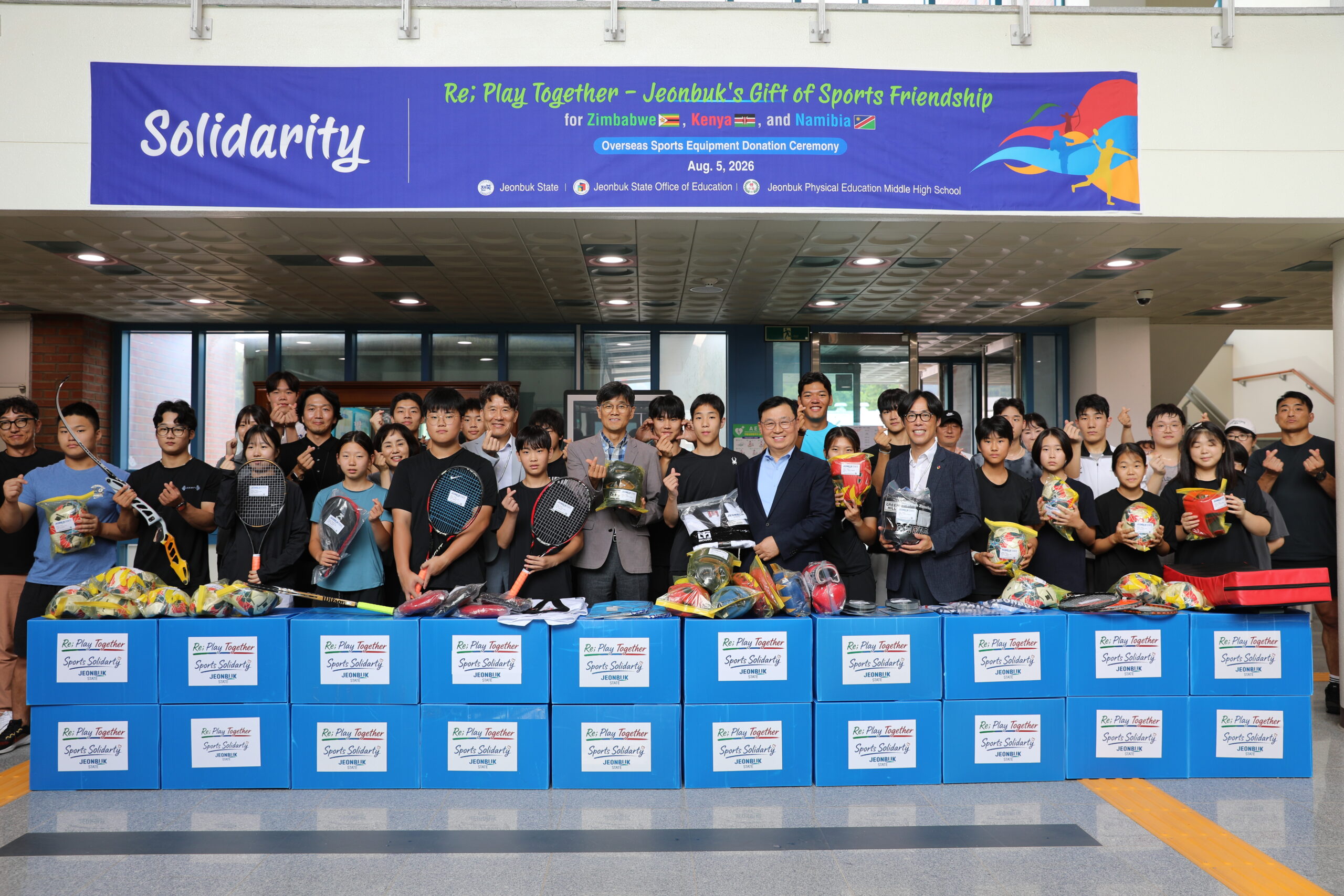
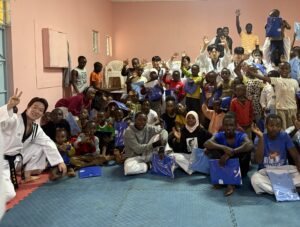
Jeonbuk State, in collaboration with the Jeonbuk State Office of Education and Jeonbuk Physicl Education Middle & High School, is continuing international exchange and friendship through sports by delivering sports equipment donated by students to youth in three African nations. On the 5th, the State and the Office of Education held a send-off ceremony at Jeonbuk Sports Middle & High School for the project titled “Re; Play Together, Jeonbuk Sports Friendship Gifts,” shipping the items to Zimbabwe, Kenya, and Namibia. The theme, ‘Re; Play Together,’ signifies resuming games (Re; Play) that had been halted due to a shortage of soccer balls and sports gear, this time together with Jeonbuk.

This initiative goes beyond mere material support; it aims to practice solidarity and friendship across borders through sports and to expand the foundation for exchange among future generations. In particular, sharing equipment that students actually used spreads the value of sharing while extending Jeonbuk’s international sports diplomacy into schools and the local community. The project originated from visits last year by officials from Zimbabwe and Namibia, with whom Jeonbuk has maintained international sports exchanges. During their visit to Jeonbuk Sports Middle & High School, they requested support for sports equipment. Students readily agreed to contribute, leading to a broader international exchange program supported by the State, the Office of Education, and the school. The donated items total 616 pieces across 12 sports, including soccer, taekwondo, shooting, archery, swimming, etc. —comprising both gear previously used by students and new items collected for this project. The equipment will be delivered to the Ministry of Sport, Recreation, Arts and Culture and National Olympic Committees of each country via Zimbabwean diplomatic missions and international shipping. It will then be distributed to young athletes and youth active in organizations such as the Kirsty Coventry Academy in Zimbabwe, the Waitaka Taekwondo Club in Kenya, and the MTC Hopsol Youth Soccer League in Namibia.
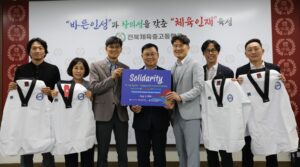
Kim Jong-phil, Director General of Jeonbuk State’s 2036 Summer Olympics Bid Department, stated: “I hope the precious sports items that nurtured the dreams of our Jeonbuk students will serve as a new source of hope for African youth. Moving forward, we will continue to promote international exchange through sports, guided by the International Olympic Committee’s (IOC) core values of inclusion and solidarity.” Im Young-gun, Director of Arts, Physical Ed & Health Division at the Jeonbuk State Office of Education, said, “It was a meaningful opportunity for our students to put into practice the spirit of sportsmanship through sharing and caring while developing a global perspective. We hope that the students’ small but heartfelt gesture will be warmly received by young people in Africa.”

Meanwhile, Jeonbuk State has been steadily expanding its international sports network by dispatching a Taekwondo demonstration team to the World Taekwondo U-21 Championship in Kenya, participating in the World Union of Olympic Cities General Assembly, and broadening sports exchanges with African nations. Starting with the “Sports Friendship Gift” pilot project, Jeonbuk State plans to consider expanding the countries and sports covered by the initiative, while also promoting the hosting of international sporting events and exchange programs inviting young athletes from overseas, with the goal of developing Jeonbuk into a specialized international sports city.
Events
”More>>”
Journalists on the podium
”More>>”
Advertisement
Young Reporter’s corner
”More>>”

Spain Crowned World Champions as Messi Bows Out

By: Andrea Migliavacca AIPS Media

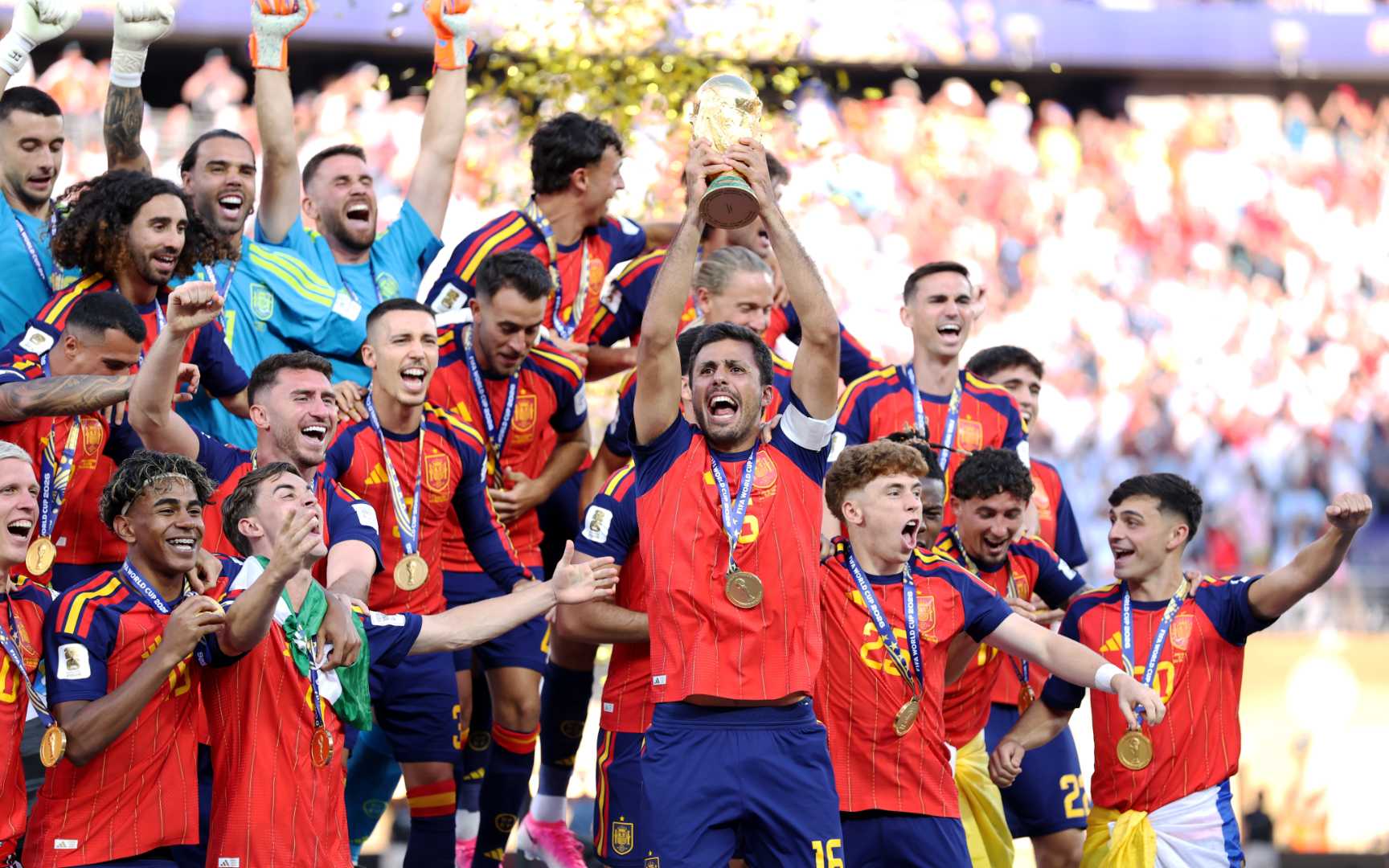
LAUSANNE, July 19, 2026 – Spain claimed their second FIFA World Cup title after substitute Ferran Torres struck in extra time to seal a hard-earned 1-0 victory over Argentina in the final at New York New Jersey Stadium. After dominating possession for more than 100 minutes against an Argentina side largely committed to defending deep, La Roja finally found the breakthrough through Torres, whose finish rewarded a patient and relentless performance.

SPAIN TAKE THE INITIATIVE The final was billed as a meeting between two generations. On one side stood the reigning world champions led by Lionel Messi, while on the other Spain arrived as European champions, powered by the emerging brilliance of teenage sensation Lamine Yamal. From the opening whistle, however, Spain established control. Luis de la Fuente’s side monopolised possession and pinned Argentina inside their own half, patiently moving the ball in search of openings. The first clear chance arrived after only five minutes when Dani Olmo slipped Yamal through on goal, but Emiliano Martínez reacted brilliantly to deny the Barcelona winger with his feet. Spain continued to dictate possession, with Dani Olmo and Lamine Yamal combining well between the lines while Álex Baena repeatedly delivered dangerous balls into the penalty area, while Argentina struggled to build attacks beyond occasional counter-attacks led by Messi and Julián Álvarez.

Despite Spain’s territorial dominance, the opening half produced few genuine opportunities. Emiliano Martínez comfortably dealt with efforts from Oyarzabal and Yamal, while Argentina failed to seriously test Unai Simón before the interval.

MARTÍNEZ KEEPS ARGENTINA ALIVE Spain resumed after the break with the same authority. Álex Baena forced Martínez into another save moments after the restart before Luis de la Fuente refreshed his attack by introducing Pedri, Nico Williams and Ferran Torres.

The substitutions immediately increased Spain’s attacking threat. Nico Williams repeatedly stretched the Argentine defence down the left, while Torres provided greater movement inside the penalty area. Emiliano Martínez continued to frustrate Spain, producing important saves to deny Nico Williams and Mikel Merino as the European champions maintained almost constant pressure.

At the other end, Lionel Scaloni was forced into a succession of changes, particularly in defence. Lisandro Martínez departed with a muscle injury before Cristian Romero was also replaced, while Leandro Paredes, Nahuel Molina, Facundo Medina and Giuliano Simeone were introduced as Argentina increasingly focused on preserving the deadlock.

RED CARD CHANGES THE FINAL The tension grew during the closing minutes of normal time.
Spain thought they had finally broken through when Nico Williams turned home from close range, only for the goal to be ruled out following a foul earlier in the move. Moments later, Argentina suffered a major setback as Enzo Fernández received a second yellow card for a late challenge on Barcelona defender Pau Cubarsí, reducing the South Americans to ten men deep into stoppage time.
Spain almost took immediate advantage, but Martínez produced another excellent save from Yamal’s stoppage-time free-kick to force extra time.

TORRES DELIVERS THE DECISIVE MOMENT Even with the extra man, Spain initially struggled to find a way through. Merino headed narrowly wide before another Torres effort was ruled out for offside.

The breakthrough finally arrived at the start of the second period of extra time.

Pedro Porro delivered a deep cross towards the far post, Nico Williams intelligently headed the ball back across goal and Ferran Torres arrived to fire a first-time finish beyond Martínez for the only goal of the final. Argentina, who spent almost the entire match without managing a shot on target, finally committed players forward in search of an equaliser. Messi attempted to spark one last comeback, while Giuliano Simeone fired over the crossbar from close range in stoppage time before Pau Cubarsí produced a crucial intervention to prevent Facundo Medina from converting Simeone’s dangerous cross. Moments later, referee Slavko Vinčić brought the final to an end, confirming Spain as world champions.

ANOTHER TROPHY FOR LA ROJA The victory completed another remarkable achievement for Luis de la Fuente’s side, who added the FIFA World Cup to their recent UEFA European Championship triumph and further established themselves as the dominant national team of the current era.

For Argentina, the defeat ended their reign as world champions. Lionel Messi and his teammates defended resolutely for more than 100 minutes, with Emiliano Martínez producing a series of outstanding saves, but they were ultimately undone by Spain’s persistence and Ferran Torres’ decisive finish. As Spain celebrated their victory, a tearful Lionel Messi left the pitch after what is widely expected to be the final World Cup appearance of one of football’s greatest players.

Spain also extended their unbeaten run to 38 consecutive matches across all competitions, the longest ever recorded by a European or South American national team, while lifting the FIFA World Cup trophy for only the second time after their historic triumph in South Africa in 2010.
 

Partners
Advertisement

Spain Crowned World Champions as Messi Bows Out

By: Andrea Migliavacca AIPS Media

LAUSANNE, July 19, 2026 – Spain claimed their second FIFA World Cup title after substitute Ferran Torres struck in extra time to seal a hard-earned 1-0 victory over Argentina in the final at New York New Jersey Stadium. After dominating possession for more than 100 minutes against an Argentina side largely committed to defending deep, La Roja finally found the breakthrough through Torres, whose finish rewarded a patient and relentless performance.

SPAIN TAKE THE INITIATIVE The final was billed as a meeting between two generations. On one side stood the reigning world champions led by Lionel Messi, while on the other Spain arrived as European champions, powered by the emerging brilliance of teenage sensation Lamine Yamal. From the opening whistle, however, Spain established control. Luis de la Fuente’s side monopolised possession and pinned Argentina inside their own half, patiently moving the ball in search of openings. The first clear chance arrived after only five minutes when Dani Olmo slipped Yamal through on goal, but Emiliano Martínez reacted brilliantly to deny the Barcelona winger with his feet. Spain continued to dictate possession, with Dani Olmo and Lamine Yamal combining well between the lines while Álex Baena repeatedly delivered dangerous balls into the penalty area, while Argentina struggled to build attacks beyond occasional counter-attacks led by Messi and Julián Álvarez.

Despite Spain’s territorial dominance, the opening half produced few genuine opportunities. Emiliano Martínez comfortably dealt with efforts from Oyarzabal and Yamal, while Argentina failed to seriously test Unai Simón before the interval.

MARTÍNEZ KEEPS ARGENTINA ALIVE Spain resumed after the break with the same authority. Álex Baena forced Martínez into another save moments after the restart before Luis de la Fuente refreshed his attack by introducing Pedri, Nico Williams and Ferran Torres.

The substitutions immediately increased Spain’s attacking threat. Nico Williams repeatedly stretched the Argentine defence down the left, while Torres provided greater movement inside the penalty area. Emiliano Martínez continued to frustrate Spain, producing important saves to deny Nico Williams and Mikel Merino as the European champions maintained almost constant pressure.

At the other end, Lionel Scaloni was forced into a succession of changes, particularly in defence. Lisandro Martínez departed with a muscle injury before Cristian Romero was also replaced, while Leandro Paredes, Nahuel Molina, Facundo Medina and Giuliano Simeone were introduced as Argentina increasingly focused on preserving the deadlock.

RED CARD CHANGES THE FINAL The tension grew during the closing minutes of normal time.
Spain thought they had finally broken through when Nico Williams turned home from close range, only for the goal to be ruled out following a foul earlier in the move. Moments later, Argentina suffered a major setback as Enzo Fernández received a second yellow card for a late challenge on Barcelona defender Pau Cubarsí, reducing the South Americans to ten men deep into stoppage time.
Spain almost took immediate advantage, but Martínez produced another excellent save from Yamal’s stoppage-time free-kick to force extra time.

TORRES DELIVERS THE DECISIVE MOMENT Even with the extra man, Spain initially struggled to find a way through. Merino headed narrowly wide before another Torres effort was ruled out for offside.

The breakthrough finally arrived at the start of the second period of extra time.

Pedro Porro delivered a deep cross towards the far post, Nico Williams intelligently headed the ball back across goal and Ferran Torres arrived to fire a first-time finish beyond Martínez for the only goal of the final. Argentina, who spent almost the entire match without managing a shot on target, finally committed players forward in search of an equaliser. Messi attempted to spark one last comeback, while Giuliano Simeone fired over the crossbar from close range in stoppage time before Pau Cubarsí produced a crucial intervention to prevent Facundo Medina from converting Simeone’s dangerous cross. Moments later, referee Slavko Vinčić brought the final to an end, confirming Spain as world champions.

ANOTHER TROPHY FOR LA ROJA The victory completed another remarkable achievement for Luis de la Fuente’s side, who added the FIFA World Cup to their recent UEFA European Championship triumph and further established themselves as the dominant national team of the current era.

For Argentina, the defeat ended their reign as world champions. Lionel Messi and his teammates defended resolutely for more than 100 minutes, with Emiliano Martínez producing a series of outstanding saves, but they were ultimately undone by Spain’s persistence and Ferran Torres’ decisive finish. As Spain celebrated their victory, a tearful Lionel Messi left the pitch after what is widely expected to be the final World Cup appearance of one of football’s greatest players.

Spain also extended their unbeaten run to 38 consecutive matches across all competitions, the longest ever recorded by a European or South American national team, while lifting the FIFA World Cup trophy for only the second time after their historic triumph in South Africa in 2010.
 

Publications
”More>>”
Videos
”More>>”

Jeonbuk State, in collaboration with the Jeonbuk State Office of Education and Jeonbuk Physicl Education Middle & High School, is continuing international exchange and friendship through sports by delivering sports equipment donated by students to youth in three African nations. On the 5th, the State and the Office of Education held a send-off ceremony at Jeonbuk Sports Middle & High School for the project titled “Re; Play Together, Jeonbuk Sports Friendship Gifts,” shipping the items to Zimbabwe, Kenya, and Namibia. The theme, ‘Re; Play Together,’ signifies resuming games (Re; Play) that had been halted due to a shortage of soccer balls and sports gear, this time together with Jeonbuk.

This initiative goes beyond mere material support; it aims to practice solidarity and friendship across borders through sports and to expand the foundation for exchange among future generations. In particular, sharing equipment that students actually used spreads the value of sharing while extending Jeonbuk’s international sports diplomacy into schools and the local community. The project originated from visits last year by officials from Zimbabwe and Namibia, with whom Jeonbuk has maintained international sports exchanges. During their visit to Jeonbuk Sports Middle & High School, they requested support for sports equipment. Students readily agreed to contribute, leading to a broader international exchange program supported by the State, the Office of Education, and the school. The donated items total 616 pieces across 12 sports, including soccer, taekwondo, shooting, archery, swimming, etc. —comprising both gear previously used by students and new items collected for this project. The equipment will be delivered to the Ministry of Sport, Recreation, Arts and Culture and National Olympic Committees of each country via Zimbabwean diplomatic missions and international shipping. It will then be distributed to young athletes and youth active in organizations such as the Kirsty Coventry Academy in Zimbabwe, the Waitaka Taekwondo Club in Kenya, and the MTC Hopsol Youth Soccer League in Namibia.

Kim Jong-phil, Director General of Jeonbuk State’s 2036 Summer Olympics Bid Department, stated: “I hope the precious sports items that nurtured the dreams of our Jeonbuk students will serve as a new source of hope for African youth. Moving forward, we will continue to promote international exchange through sports, guided by the International Olympic Committee’s (IOC) core values of inclusion and solidarity.” Im Young-gun, Director of Arts, Physical Ed & Health Division at the Jeonbuk State Office of Education, said, “It was a meaningful opportunity for our students to put into practice the spirit of sportsmanship through sharing and caring while developing a global perspective. We hope that the students’ small but heartfelt gesture will be warmly received by young people in Africa.”

Meanwhile, Jeonbuk State has been steadily expanding its international sports network by dispatching a Taekwondo demonstration team to the World Taekwondo U-21 Championship in Kenya, participating in the World Union of Olympic Cities General Assembly, and broadening sports exchanges with African nations. Starting with the “Sports Friendship Gift” pilot project, Jeonbuk State plans to consider expanding the countries and sports covered by the initiative, while also promoting the hosting of international sporting events and exchange programs inviting young athletes from overseas, with the goal of developing Jeonbuk into a specialized international sports city.

Events
”More>>”
Journalists on the podium
”More>>”
Advertisement
Young Reporter’s corner
”More>>”
Partners
Advertisement

All News

Video Gallery