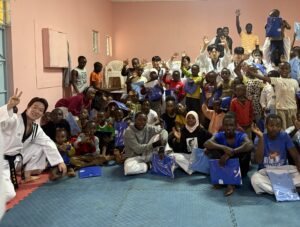
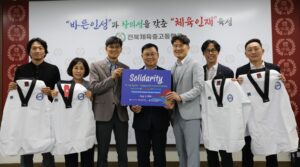
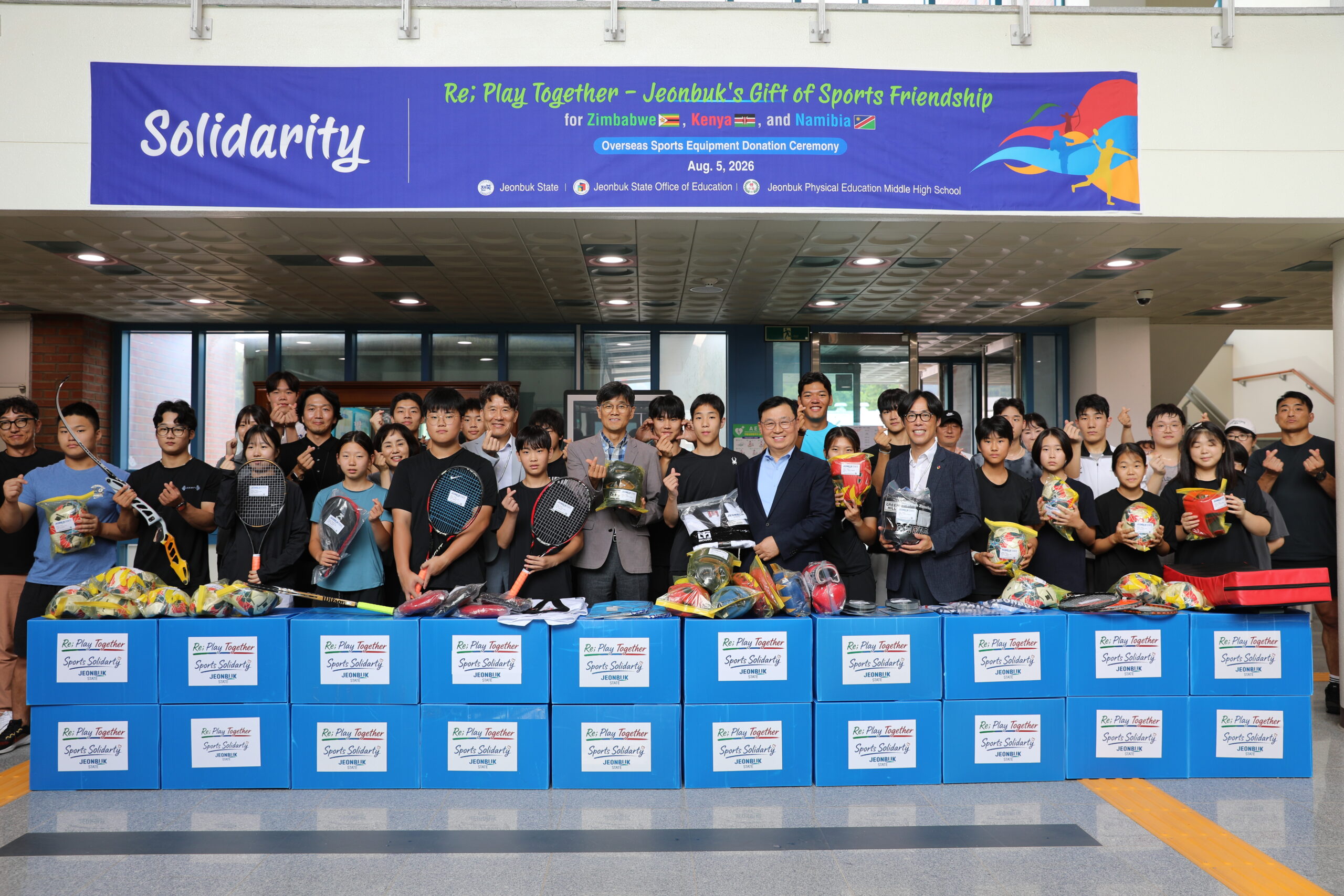
Jeonbuk State, in collaboration with the Jeonbuk State Office of Education and Jeonbuk Physicl Education Middle & High School, is continuing international exchange and friendship through sports by delivering sports equipment donated by students to youth in three African nations. On the 5th, the State and the Office of Education held a send-off ceremony at Jeonbuk Sports Middle & High School for the project titled “Re; Play Together, Jeonbuk Sports Friendship Gifts,” shipping the items to Zimbabwe, Kenya, and Namibia. The theme, ‘Re; Play Together,’ signifies resuming games (Re; Play) that had been halted due to a shortage of soccer balls and sports gear, this time together with Jeonbuk.
This initiative goes beyond mere material support; it aims to practice solidarity and friendship across borders through sports and to expand the foundation for exchange among future generations. In particular, sharing equipment that students actually used spreads the value of sharing while extending Jeonbuk’s international sports diplomacy into schools and the local community. The project originated from visits last year by officials from Zimbabwe and Namibia, with whom Jeonbuk has maintained international sports exchanges. During their visit to Jeonbuk Sports Middle & High School, they requested support for sports equipment. Students readily agreed to contribute, leading to a broader international exchange program supported by the State, the Office of Education, and the school. The donated items total 616 pieces across 12 sports, including soccer, taekwondo, shooting, archery, swimming, etc. —comprising both gear previously used by students and new items collected for this project. The equipment will be delivered to the Ministry of Sport, Recreation, Arts and Culture and National Olympic Committees of each country via Zimbabwean diplomatic missions and international shipping. It will then be distributed to young athletes and youth active in organizations such as the Kirsty Coventry Academy in Zimbabwe, the Waitaka Taekwondo Club in Kenya, and the MTC Hopsol Youth Soccer League in Namibia.
Kim Jong-phil, Director General of Jeonbuk State’s 2036 Summer Olympics Bid Department, stated: “I hope the precious sports items that nurtured the dreams of our Jeonbuk students will serve as a new source of hope for African youth. Moving forward, we will continue to promote international exchange through sports, guided by the International Olympic Committee’s (IOC) core values of inclusion and solidarity.” Im Young-gun, Director of Arts, Physical Ed & Health Division at the Jeonbuk State Office of Education, said, “It was a meaningful opportunity for our students to put into practice the spirit of sportsmanship through sharing and caring while developing a global perspective. We hope that the students’ small but heartfelt gesture will be warmly received by young people in Africa.”
Meanwhile, Jeonbuk State has been steadily expanding its international sports network by dispatching a Taekwondo demonstration team to the World Taekwondo U-21 Championship in Kenya, participating in the World Union of Olympic Cities General Assembly, and broadening sports exchanges with African nations. Starting with the “Sports Friendship Gift” pilot project, Jeonbuk State plans to consider expanding the countries and sports covered by the initiative, while also promoting the hosting of international sporting events and exchange programs inviting young athletes from overseas, with the goal of developing Jeonbuk into a specialized international sports city.
BUDAPEST, November 24, 2025 – Sport Forum Hungary 2025 sent a clear message: Women sports journalists are no longer on the margins of global sports media – they are shaping it. With a distinguished international delegation spanning four continents, the forum placed women’s representation, leadership, and visibility at the center of its agenda.
A High-Level Welcome: Meeting the Hungarian Olympic Committee The dialogue began on November 18, one day before the forum officially opened, with a reception for the invited women sports journalists at the National Olympic Committee of Hungary by NOC President Zsolt Gyulay. The invitation and organization of this pivotal event were led by Zsuzsa Csisztu, Vice-president of the Hungarian Sports Journalist Association, who also moderated several panels with in-depth energy, driven by her conviction that she can create lasting change in the culture of global sports journalism.
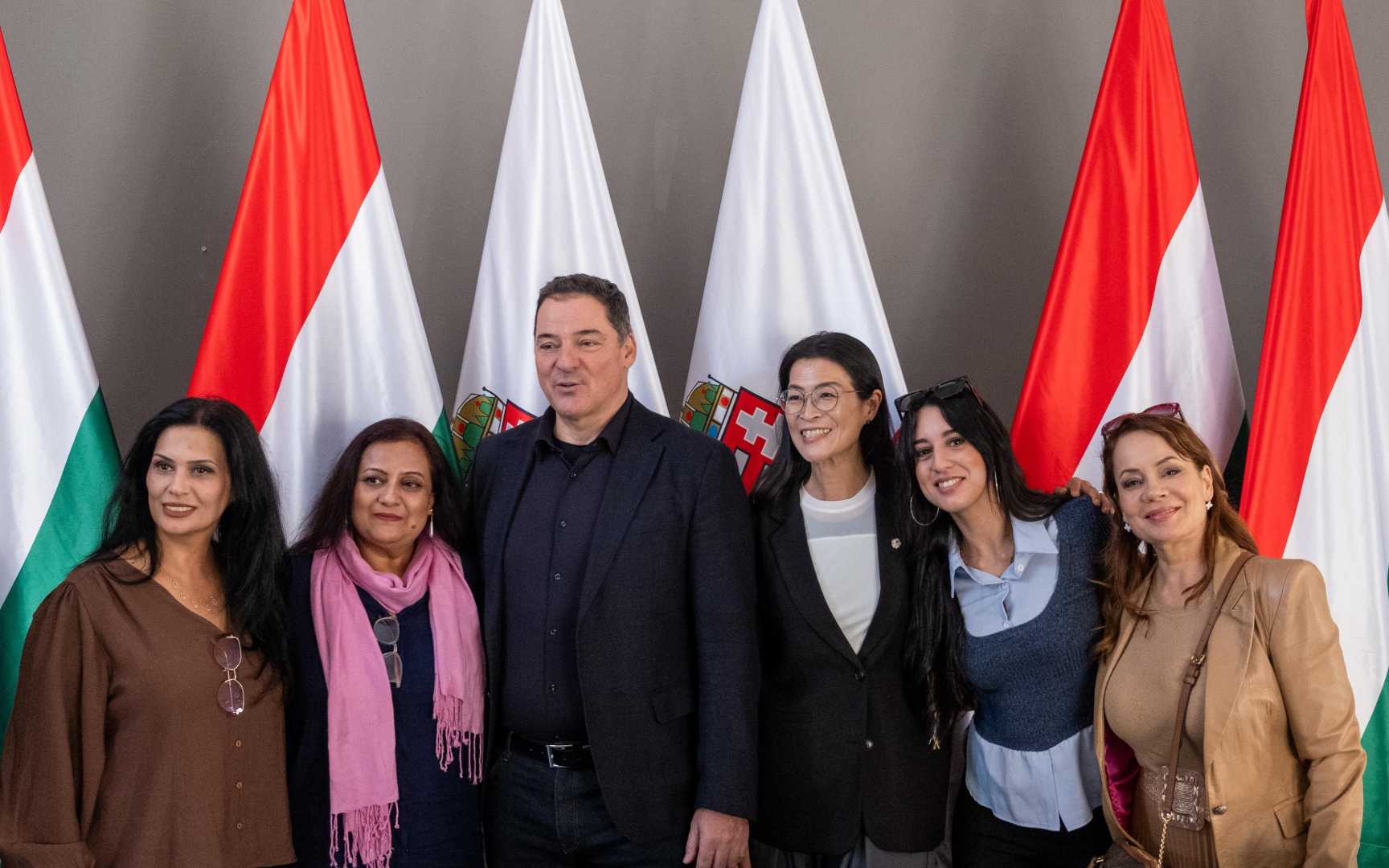
The international delegation included: – Prarthana Hazarika (India) – Helen Chi (Chinese Taipei) – Nargiz M. Eldar (Azerbaijan) – Michaela Grendelová (Slovakia) – Sarah Derbal (Algeria) – Valentina Peña (Colombia) – Karen Jordan (Panama)
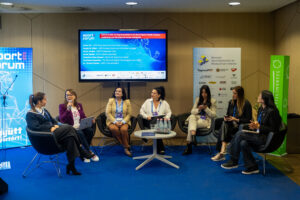
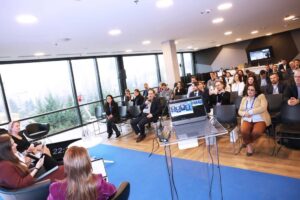
Panel Discussion at the Forum
The dialogue explored Hungary’s long-term Olympic strategy, athlete development pathways, and sport-science investment, highlighting how the country builds its talent system from the school level. With five sports lessons a week in every school, federations and clubs work directly with educators to identify and guide talented young athletes from an early age.
Responding to a question on cooperation between the National Olympic Committee and sports media, NOC President Zsolt Gyulay and HSJA Vice-president Zsuzsa Csisztu underlined the long-standing collaboration between the Hungarian Olympic Committee and the national press community: “The National Olympic Committee of Hungary and the Hungarian Sports Journalist Association carry out mutual projects about sports and sports journalism in the country,” said Gyulay. “This partnership is essential because strong journalism helps strengthen Hungarian sport itself,” noted Zsuzsa.
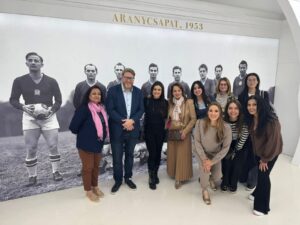
At the Puskas Museum
Exploring Hungary’s Sporting Heritage and Journalism History
Following the meeting, the delegation visited the University of Sports Science, where they were welcomed by HUSS rector Tamás Sterbenz. He provided information about the Master’s program in Media Communications and announced that a new program in Sports Diplomacy will be launched at the university in Budapest in the upcoming academic year.
After this, the delegation visited Puskás Aréna and Puskás Museum. At the museum, György Zölösi, President of the Hungarian Sports Press Association, offered deep historical insight into Hungary’s football heritage and the global impact of Ferenc Puskás. Zölösi noted: “You cannot understand Hungary’s sporting culture without understanding Puskás. His story is also a story of journalists who carried his legend to the world.”
Sport Forum Hungary 2025
Global Voices and Shared Challenges
Over several sessions, journalists exchanged experiences from their regions, reflecting on common challenges – unequal accreditation and persistent gender biases in newsroom hierarchies. The journalists collectively emphasized that women’s sports do not lack quality, excitement, or audience interest—they lack equitable professional opportunities. Across every session, the focus remained consistent: creating an environment where women journalists can report freely, lead confidently, and gain equal recognition on every stage.
Prarthana Hazarika (India) emphasized the importance of women’s perspectives in sports media, noting: “Women journalists bring depth and global insight to sports storytelling. Supporting their development strengthens the entire Olympic movement. We often work twice as hard for half the recognition. Here, we are seen, we are heard, and we stand together.”
Helen Chi (Chinese Taipei) shared her personal journey and vision for the future of women in sports journalism:
“Sports changed my life and became a part of who I am. I want to see more women journalists from Taiwan and across Asia stepping into the field, telling the stories that matter, and showing the world our perspective. Women’s voices are essential in shaping the narrative of sports.”
Sarah Derbal (Algeria) emphasized the core issue of access:
“Access is not a privilege – it is a professional right. Women journalists deserve the same entry points to stadiums, locker rooms, and decision-making spaces.”
Michaela Grendelová (Slovakia) highlighted the importance of visibility for women in sports media:
“Visibility is a value itself, and value is visibility. When women participate and are seen in sports media, it strengthens the profession and inspires the next generation of journalists.”
Valentina Peña (Colombia) and Karen Jordan (Panama), both active and energetic journalists with strong social media presence, emphasized the impact of women in male-dominated newsrooms:
“Our energy, commitment, and passion for storytelling show the world how women can change the shape of sports itself,” Valentina said. “We can attract communities, increase engagement, and spark interest. Women’s perspectives make sports media richer and more dynamic,” noted Karen.
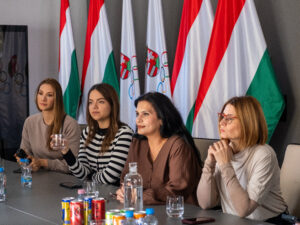
From left Karen Jordan, Valentina Pena, Nargiz Eldar, Michaela Grendelová
A Global Mentorship Initiative
A key outcome of the forum was a collaborative discussion between Azerbaijan, Hungary, India, and Chinese Taipei to create a global mentorship programme for sports journalists. The remote mentorship sessions will be carried out by the national sports journalists’ associations with the support of the National Olympic Committees. Specifically:
– Azerbaijan will run the program in collaboration with the Azerbaijan Olympic Committee.
– Hungary will implement it jointly with the Hungarian Olympic Committee and the Hungarian Sports Journalist Association.
– India and Chinese Taipei will work with their respective Olympic Committees and national journalist associations.
Such collaboration allows the countries to learn from one another while giving journalists the skills, access, and confidence they need to succeed in competition reporting. Combined with academic training, this approach creates a comprehensive pathway for developing the next generation of skilled, empowered sports journalists and enhancing the global quality of Olympic sports media.
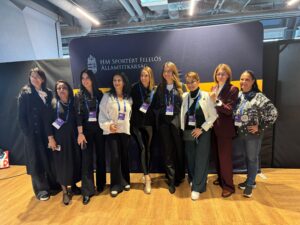
Delegates at the Forum
A Turning Point for the Industry Sport Forum Hungary 2025 became more than a gathering; it became a platform for rewriting the narrative of women’s roles in sports media. From the discussions with the Olympic Committee to the professional and cultural tours in Budapest, the week demonstrated that meaningful progress comes when women journalists are given the stage, the microphone, and the authority to lead.
Zsuzsa Csisztu’s leadership throughout the forum was a driving force. By organizing the invitation of the international delegation and moderating panels with insight and passion, she exemplified the change she envisions: a sports journalism culture where women are consistently recognized, empowered, and positioned to shape the future.
The message was unmistakable: Women are not just reporting the future of sport—they are shaping it.
Partners
Advertisement
Sport Forum Hungary 2025 elevates global women sports journalists in Budapest
BUDAPEST, November 24, 2025 – Sport Forum Hungary 2025 sent a clear message: Women sports journalists are no longer on the margins of global sports media – they are shaping it. With a distinguished international delegation spanning four continents, the forum placed women’s representation, leadership, and visibility at the center of its agenda.
A High-Level Welcome: Meeting the Hungarian Olympic Committee The dialogue began on November 18, one day before the forum officially opened, with a reception for the invited women sports journalists at the National Olympic Committee of Hungary by NOC President Zsolt Gyulay. The invitation and organization of this pivotal event were led by Zsuzsa Csisztu, Vice-president of the Hungarian Sports Journalist Association, who also moderated several panels with in-depth energy, driven by her conviction that she can create lasting change in the culture of global sports journalism.
The international delegation included: – Prarthana Hazarika (India) – Helen Chi (Chinese Taipei) – Nargiz M. Eldar (Azerbaijan) – Michaela Grendelová (Slovakia) – Sarah Derbal (Algeria) – Valentina Peña (Colombia) – Karen Jordan (Panama)
Panel Discussion at the Forum
The dialogue explored Hungary’s long-term Olympic strategy, athlete development pathways, and sport-science investment, highlighting how the country builds its talent system from the school level. With five sports lessons a week in every school, federations and clubs work directly with educators to identify and guide talented young athletes from an early age.
Responding to a question on cooperation between the National Olympic Committee and sports media, NOC President Zsolt Gyulay and HSJA Vice-president Zsuzsa Csisztu underlined the long-standing collaboration between the Hungarian Olympic Committee and the national press community: “The National Olympic Committee of Hungary and the Hungarian Sports Journalist Association carry out mutual projects about sports and sports journalism in the country,” said Gyulay. “This partnership is essential because strong journalism helps strengthen Hungarian sport itself,” noted Zsuzsa.
At the Puskas Museum
Exploring Hungary’s Sporting Heritage and Journalism History
Following the meeting, the delegation visited the University of Sports Science, where they were welcomed by HUSS rector Tamás Sterbenz. He provided information about the Master’s program in Media Communications and announced that a new program in Sports Diplomacy will be launched at the university in Budapest in the upcoming academic year.
After this, the delegation visited Puskás Aréna and Puskás Museum. At the museum, György Zölösi, President of the Hungarian Sports Press Association, offered deep historical insight into Hungary’s football heritage and the global impact of Ferenc Puskás. Zölösi noted: “You cannot understand Hungary’s sporting culture without understanding Puskás. His story is also a story of journalists who carried his legend to the world.”
Sport Forum Hungary 2025
Global Voices and Shared Challenges
Over several sessions, journalists exchanged experiences from their regions, reflecting on common challenges – unequal accreditation and persistent gender biases in newsroom hierarchies. The journalists collectively emphasized that women’s sports do not lack quality, excitement, or audience interest—they lack equitable professional opportunities. Across every session, the focus remained consistent: creating an environment where women journalists can report freely, lead confidently, and gain equal recognition on every stage.
Prarthana Hazarika (India) emphasized the importance of women’s perspectives in sports media, noting: “Women journalists bring depth and global insight to sports storytelling. Supporting their development strengthens the entire Olympic movement. We often work twice as hard for half the recognition. Here, we are seen, we are heard, and we stand together.”
Helen Chi (Chinese Taipei) shared her personal journey and vision for the future of women in sports journalism:
“Sports changed my life and became a part of who I am. I want to see more women journalists from Taiwan and across Asia stepping into the field, telling the stories that matter, and showing the world our perspective. Women’s voices are essential in shaping the narrative of sports.”
Sarah Derbal (Algeria) emphasized the core issue of access:
“Access is not a privilege – it is a professional right. Women journalists deserve the same entry points to stadiums, locker rooms, and decision-making spaces.”
Michaela Grendelová (Slovakia) highlighted the importance of visibility for women in sports media:
“Visibility is a value itself, and value is visibility. When women participate and are seen in sports media, it strengthens the profession and inspires the next generation of journalists.”
Valentina Peña (Colombia) and Karen Jordan (Panama), both active and energetic journalists with strong social media presence, emphasized the impact of women in male-dominated newsrooms:
“Our energy, commitment, and passion for storytelling show the world how women can change the shape of sports itself,” Valentina said. “We can attract communities, increase engagement, and spark interest. Women’s perspectives make sports media richer and more dynamic,” noted Karen.
From left Karen Jordan, Valentina Pena, Nargiz Eldar, Michaela Grendelová
A Global Mentorship Initiative
A key outcome of the forum was a collaborative discussion between Azerbaijan, Hungary, India, and Chinese Taipei to create a global mentorship programme for sports journalists. The remote mentorship sessions will be carried out by the national sports journalists’ associations with the support of the National Olympic Committees. Specifically:
– Azerbaijan will run the program in collaboration with the Azerbaijan Olympic Committee.
– Hungary will implement it jointly with the Hungarian Olympic Committee and the Hungarian Sports Journalist Association.
– India and Chinese Taipei will work with their respective Olympic Committees and national journalist associations.
Such collaboration allows the countries to learn from one another while giving journalists the skills, access, and confidence they need to succeed in competition reporting. Combined with academic training, this approach creates a comprehensive pathway for developing the next generation of skilled, empowered sports journalists and enhancing the global quality of Olympic sports media.
Delegates at the Forum
A Turning Point for the Industry Sport Forum Hungary 2025 became more than a gathering; it became a platform for rewriting the narrative of women’s roles in sports media. From the discussions with the Olympic Committee to the professional and cultural tours in Budapest, the week demonstrated that meaningful progress comes when women journalists are given the stage, the microphone, and the authority to lead.
Zsuzsa Csisztu’s leadership throughout the forum was a driving force. By organizing the invitation of the international delegation and moderating panels with insight and passion, she exemplified the change she envisions: a sports journalism culture where women are consistently recognized, empowered, and positioned to shape the future.
The message was unmistakable: Women are not just reporting the future of sport—they are shaping it.
Publications
”More>>”
Videos
”More>>”
Jeonbuk State, in collaboration with the Jeonbuk State Office of Education and Jeonbuk Physicl Education Middle & High School, is continuing international exchange and friendship through sports by delivering sports equipment donated by students to youth in three African nations. On the 5th, the State and the Office of Education held a send-off ceremony at Jeonbuk Sports Middle & High School for the project titled “Re; Play Together, Jeonbuk Sports Friendship Gifts,” shipping the items to Zimbabwe, Kenya, and Namibia. The theme, ‘Re; Play Together,’ signifies resuming games (Re; Play) that had been halted due to a shortage of soccer balls and sports gear, this time together with Jeonbuk.
This initiative goes beyond mere material support; it aims to practice solidarity and friendship across borders through sports and to expand the foundation for exchange among future generations. In particular, sharing equipment that students actually used spreads the value of sharing while extending Jeonbuk’s international sports diplomacy into schools and the local community. The project originated from visits last year by officials from Zimbabwe and Namibia, with whom Jeonbuk has maintained international sports exchanges. During their visit to Jeonbuk Sports Middle & High School, they requested support for sports equipment. Students readily agreed to contribute, leading to a broader international exchange program supported by the State, the Office of Education, and the school. The donated items total 616 pieces across 12 sports, including soccer, taekwondo, shooting, archery, swimming, etc. —comprising both gear previously used by students and new items collected for this project. The equipment will be delivered to the Ministry of Sport, Recreation, Arts and Culture and National Olympic Committees of each country via Zimbabwean diplomatic missions and international shipping. It will then be distributed to young athletes and youth active in organizations such as the Kirsty Coventry Academy in Zimbabwe, the Waitaka Taekwondo Club in Kenya, and the MTC Hopsol Youth Soccer League in Namibia.
Kim Jong-phil, Director General of Jeonbuk State’s 2036 Summer Olympics Bid Department, stated: “I hope the precious sports items that nurtured the dreams of our Jeonbuk students will serve as a new source of hope for African youth. Moving forward, we will continue to promote international exchange through sports, guided by the International Olympic Committee’s (IOC) core values of inclusion and solidarity.” Im Young-gun, Director of Arts, Physical Ed & Health Division at the Jeonbuk State Office of Education, said, “It was a meaningful opportunity for our students to put into practice the spirit of sportsmanship through sharing and caring while developing a global perspective. We hope that the students’ small but heartfelt gesture will be warmly received by young people in Africa.”
Meanwhile, Jeonbuk State has been steadily expanding its international sports network by dispatching a Taekwondo demonstration team to the World Taekwondo U-21 Championship in Kenya, participating in the World Union of Olympic Cities General Assembly, and broadening sports exchanges with African nations. Starting with the “Sports Friendship Gift” pilot project, Jeonbuk State plans to consider expanding the countries and sports covered by the initiative, while also promoting the hosting of international sporting events and exchange programs inviting young athletes from overseas, with the goal of developing Jeonbuk into a specialized international sports city.